
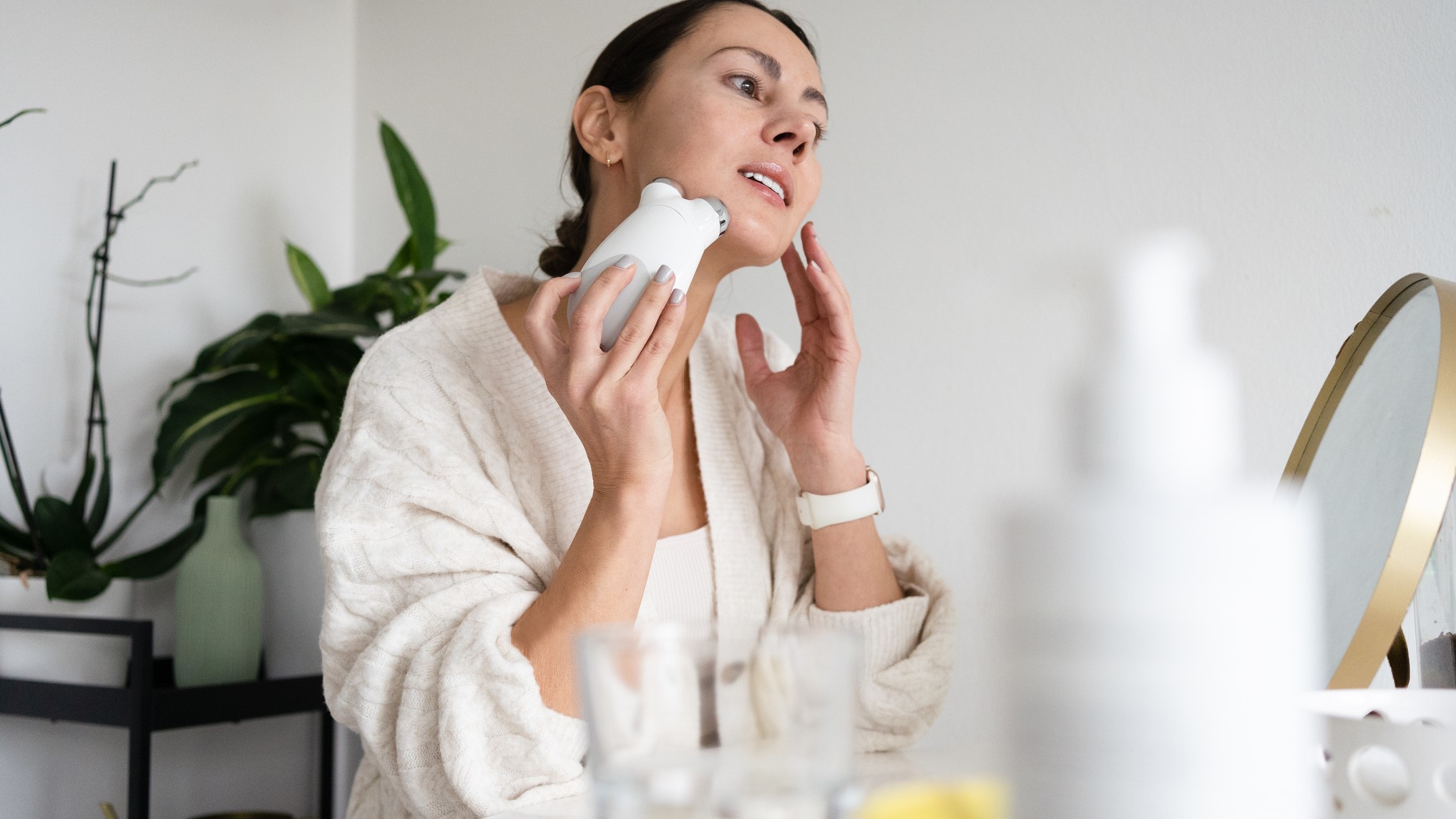
Main Takeaways
- Layering beauty devices safely comes down to mechanism, not a generic checklist. Some devices work through light, others through electricity, and others through heat.
- LED and microcurrent generally layer well together, since neither generates heat and they don’t compete for the same biological pathway.
- RF is the main caution point. It works by heating tissue, so stacking it with other heat sources or strong actives raises irritation risk.
- Skincare products still follow the basic rule: cleanse, then device, then products, with extra care around actives after RF.
- Laser, IPL, and RF microneedling live in a different category entirely and aren’t meant to be layered into a regular device routine.
More people now own more than one at-home beauty device, and most are left guessing what order to use them in. Some guesses are harmless. Others waste effort, or worse, irritate skin that didn’t need to be irritated in the first place. The good news is that the order isn’t arbitrary. Once you understand what each device is actually doing to your skin, the logic behind layering them becomes a lot clearer, and the guesswork mostly disappears.
Layering Beauty Devices Isn’t One-Size-Fits-All
Every device on the market works through a different mechanism, and that mechanism is really the whole story. LED uses light. Microcurrent uses electrical current. RF uses heat. Because they act on skin in fundamentally different ways, some pairs coexist without issue, while others compound the same effect past a safe threshold.
This is also why generic advice, like “always do devices before serums” or “space out your devices by a day,” only gets you part of the way there. It’s a reasonable starting point, but it doesn’t explain why RF needs more caution than LED, or why microcurrent gel changes the order you’d otherwise use. Understanding the mechanism behind each device is what actually answers those questions, rather than just following a rule without knowing why it exists.
The Three Mechanisms Behind LED, Microcurrent, and RF
LED light therapy is non-thermal. Specific wavelengths of light are absorbed by a mitochondrial enzyme called cytochrome c oxidase, which boosts cellular energy production and triggers repair signals in skin cells. There’s no heat and no electrical current involved, just light doing a biochemical job at the cellular level. Because the effect is happening inside the cell rather than on the skin’s surface, LED tends to be the gentlest of the three and the easiest to combine with other steps.
Microcurrent delivers a sub-sensory electrical current, under 1 milliamp, designed to mimic the body’s natural bioelectric signals . This stimulates muscle and cellular activity without generating heat. It does require a conductive gel to actually transmit the current through the skin’s surface, since dry skin doesn’t conduct electricity well enough for the device to work as intended. That gel requirement is a small detail, but it ends up shaping where microcurrent fits in a routine.
Radiofrequency (RF) works by converting electrical energy into heat inside the dermis. That heat is what triggers collagen remodeling and skin tightening over time . Unlike the other two, RF is fundamentally a thermal treatment, and that distinction matters more than it might seem, since heat interacts with skin, and with other products and devices, very differently than light or low-level electrical current do.
Which Combinations Layer Well, and Why
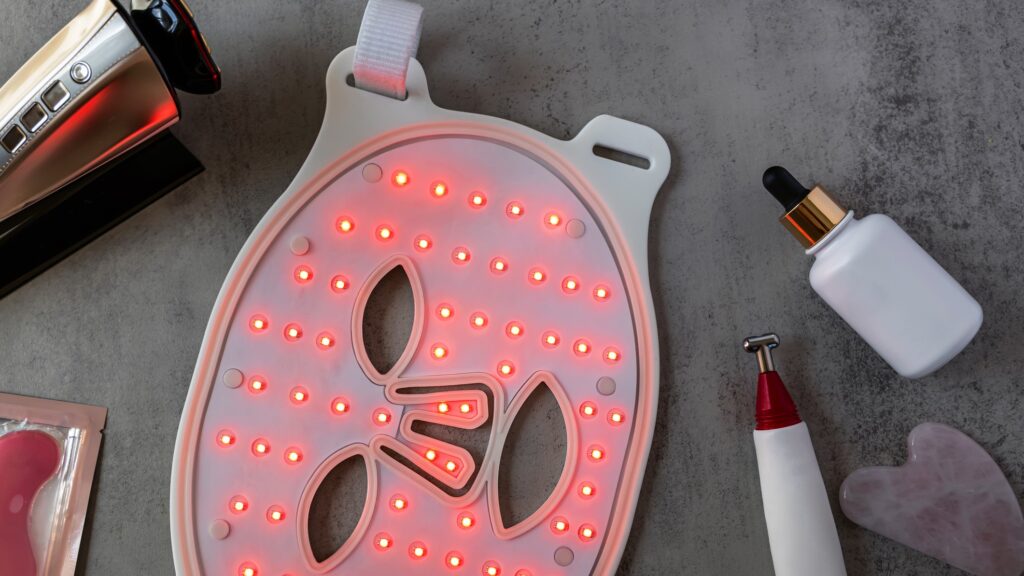
LED and microcurrent are the easiest pairing to justify. Neither one generates heat, and they operate through completely separate systems: light-triggered cellular repair versus electrical muscle stimulation. There’s no real mechanism by which combining them would overload the skin or push either effect past a safe range, since they’re not both drawing on the same physiological process.
The main issue isn’t safety, it’s order. Microcurrent’s conductive gel sits on top of the skin and can interfere with how well LED light actually penetrates, since a layer of gel between the light source and the skin can scatter or block some of that light. Because of that, LED typically goes first on clean, dry skin, followed by microcurrent with its own gel applied afterward. Once the microcurrent session ends, the gel gets rinsed or wiped off before moving into the rest of a skincare routine.
Where RF Changes the Equation
RF is the device that needs the most caution, precisely because it works by heating tissue. Using RF back-to-back with another heat-generating step, or applying strong actives like retinol or AHAs immediately afterward while skin is still warm and more permeable, raises real irritation risk. Warm, slightly flushed skin absorbs products faster than usual, which sounds beneficial in theory but in practice means potent ingredients can penetrate more aggressively than intended, increasing the odds of redness or sensitivity.
Heat also temporarily affects the skin barrier while a device is actively working, which is why RF makes more sense as an endpoint step rather than something to build a longer routine around. If you’re using RF and another device in the same routine, plan RF last, or give your skin several minutes to cool down before moving on to anything else, including a full skincare routine.
Fitting Skincare Products Into the Order
The general layering rule holds regardless of which device you’re using: cleanse first, then use the device on clean, dry skin, then apply skincare products afterward, moving from thinnest to thickest. Where things differ is how soon you should introduce actives after each device type, and how much caution that requires.
After LED or microcurrent, skin isn’t heated or barrier-disrupted, so moving straight into a normal routine, vitamin C, moisturizer, retinol, is generally fine without much added risk. After RF, it’s important to let skin cool for a few minutes before applying anything potent, and some people prefer to skip actives entirely on RF days and stick to simpler, calming products like a plain moisturizer instead. Combining residual heat with a strong active is one of the more common ways people end up with unnecessary irritation that has nothing to do with either product or device being poorly formulated.
A Quick Mention on Laser, IPL, and RF Microneedling
These three deserve a brief mention, mostly to draw a clear line around what this layering discussion does and doesn’t apply to. Laser and IPL devices work through a process called selective photothermolysis, where light energy targets melanin in the hair follicle and damages it enough to slow regrowth. That’s a deliberate, controlled injury to the follicle, not a gentle daily step meant to sit alongside LED or microcurrent in a routine.
RF microneedling goes further, combining mechanical micro-injury from tiny needles with RF heat delivered beneath the skin’s surface. The FDA has issued safety communications flagging serious complications from RF microneedling devices, including burns, scarring, and disfigurement, particularly when used improperly. These treatments exist closer to a targeted procedure than a routine step, and they aren’t something to mix into a regular device layering plan, either on the same day or even within the same week as other active treatments.
A Simple Example Routine
For someone who owns both an LED mask and a microcurrent tool, a reasonable weekly routine might look like this:
- Cleanse skin and pat dry completely before starting either device
- Use the LED mask for its recommended session length, typically 10 to 20 minutes
- Follow with microcurrent using its conductive gel, working through the device’s usual pattern
- Rinse off any remaining gel, then apply a normal skincare routine: serum, moisturizer, and SPF in the morning
If RF is added to the mix on a separate day, it’s best to use it on its own, without other devices layered around it, and to hold off on potent actives until skin has fully cooled and returned to its normal temperature.
Conclusion
Layering beauty devices safely isn’t about memorizing a rigid order. It’s about understanding what each device is doing to your skin, light-based repair, electrical stimulation, or heat-driven remodeling, and recognizing when those mechanisms can coexist versus when they compound risk. LED and microcurrent are a low-friction pairing that most people can combine without much thought. RF deserves more caution, mainly around timing and what you apply immediately afterward, since heat changes how skin responds to everything that follows it. And treatments like laser, IPL, and RF microneedling sit outside this conversation altogether, closer to targeted procedures than everyday routine steps. When in doubt, the safest approach is to treat heat-based devices as the one variable worth slowing down for, and to let mechanism, not habit, guide the order you build your routine around.
Sources
- “Unlocking the Power of Light on the Skin: A Comprehensive Review of Photobiomodulation“, International Journal of Molecular Sciences, 2024.
- “Physiological Effects of Microcurrent and Its Application for Maximizing Post-Exercise Recovery“, European journal of applied physiology, 2023.
- “The Landscape of Radiofrequency Technology for Skin Rejuvenation“, Health science reports, 2025.
- “Laser Hair Removal“, Mayo Clinic, 2026.