Main Takeaways
- The wearable beauty market is valued near $2.79 billion in 2025 and is projected to reach $9.75 billion by 2035.
- 2026 devices increasingly combine three functions in one: sensing, treating, and tracking, rather than doing just one job.
- LED-based wearables currently dominate the category, making up roughly 28.5% of the market.
- Real limitations remain, including battery life, comfort, and a lack of FDA clearance for many diagnostic features.
- The technology is advancing quickly, but proof that tracking your skin actually improves outcomes is still thin.
Wearable beauty tech has quietly become one of the fastest-growing categories in the beauty industry. What used to mean a single LED mask worn for ten minutes a day has expanded into patches, bands, and sensors built to track your skin around the clock. Some of this is genuinely useful engineering. Some of it is a well-marketed sensor strapped to your face. Here’s what’s actually happening in 2026, and how much of it holds up.
What Counts as a Wearable Beauty Device
Not every beauty gadget counts as a wearable. A handheld LED mask you use for a short session isn’t quite the same category as a patch or band designed to stay on your skin and collect data over hours or days. Wearable beauty devices are built around continuous use. They’re meant to monitor something, like hydration or sun exposure, while you go about your day, rather than deliver a single treatment and then get put away.
This distinction matters because it changes what you should expect from the product. A short-session device like an LED mask is judged mostly on its treatment effect. A wearable is judged on both its treatment effect and its ability to track something accurately over time, which adds an entirely separate layer of technology, and a separate set of questions, to evaluate.
The Main Types of Wearable Beauty Devices
The category has grown enough in 2026 to split into a few recognizable formats. Each one takes a different approach to staying on your skin and collecting data.
| Format | What It Typically Does | Example |
|---|---|---|
| Adhesive patches | Track hydration, UV exposure, or firmness while worn on the skin | Amorepacific Global Skinsight |
| Wearable eye or face patches | Combine skin analysis with active-ingredient delivery and LED therapy | LG H&H Hyper Rejuvenating Eye Patch |
| Diagnostic scan devices | Pair with wearable sensor data to project long-term skin health trends | NuraLogix Longevity Mirror |
| AI-driven analysis tools | Use scans to guide personalized product matching and correction | Kolmar Korea Scar Beauty Device |
These categories aren’t fully standardized yet, and some products blur the lines between them. But the table gives a sense of how differently “wearable beauty device” can be interpreted depending on the brand.
What These Devices Measure
Most 2026 wearables focus on a handful of core metrics: skin hydration, UV exposure, firmness, and sometimes pH balance. Amorepacific’s Global Skinsight patch tracks hydration, UV exposure, and firmness in real time and connects to a smart home ecosystem for ongoing monitoring. The idea is to replace guesswork with actual data, giving people a clearer picture of what their skin deals with day to day instead of relying on how it looks or feels in the mirror.
Other devices go further into diagnostics rather than pure tracking. Kolmar Korea’s Scar Beauty Device, which won a CES Best of Innovation award, uses AI to analyze scarring and match it to a custom concealer formulation. That’s a different goal than hydration tracking, but it reflects the same underlying trend: using sensors and AI to replace subjective judgment with something that looks more like a lab reading.
The Shift Toward “Diagnose, Treat, Track”
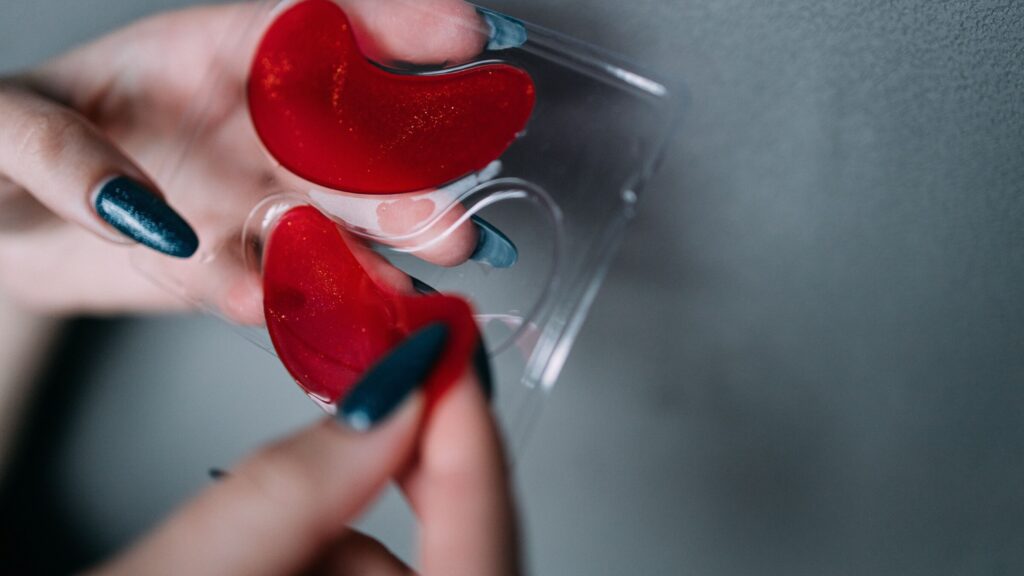
The biggest change in 2026 isn’t the sensors themselves. It’s how they’re being bundled. Industry analysts covering this year’s CES described a shift from standalone novelty gadgets toward integrated systems that diagnose a problem, treat it, and then track the results over time. LG H&H’s Hyper Rejuvenating Eye Patch is a good example. It pairs AI-driven skin analysis with active-ingredient delivery and flexible LED therapy, all in a single wearable .
This “closed-loop” approach also reflects a business shift happening behind the scenes. Brands are moving away from one-time device sales and toward ongoing subscription platforms built around the data these devices collect. In practice, that means the device itself may become less important than the app and data service tied to it, a model that looks more like fitness wearables than traditional beauty tools.
Does the Data Actually Improve Results
Tracking hydration or UV exposure can genuinely help people notice patterns they’d otherwise miss, like realizing their skin is more sun-exposed on certain days than they assumed. That kind of awareness can lead to better habits, which is a real benefit on its own.
But there’s a difference between collecting data and proving that the data itself improves skin outcomes. Right now, most of these devices are better at measurement than they are at demonstrating that measurement changes results. A hydration tracker can tell you your skin is dry. It can’t yet prove that wearing the tracker made your skin less dry than it would have been otherwise. The treatment components, like LED or microcurrent, still rely on the same evidence base those technologies have always had, whether or not a sensor happens to be attached.
Where the Category Still Falls Short
A few practical issues are holding wearable beauty tech back from wider adoption:
- Battery life and comfort remain common complaints, and devices that need frequent charging or feel bulky see steep drop-off in daily use
- Many diagnostic wearables still lack FDA clearance, and insurance eligibility programs like FSA and HSA reimbursement remain limited or pending for several products
- Pricing is still uneven across the category, though many LED-based wearables are trending down from premium price points toward more accessible ones
- Accuracy claims are hard to verify independently, since most validation data comes directly from the manufacturers themselves rather than outside researchers
These aren’t small details. Regulatory clearance in particular is often what separates a device that makes credible medical claims from one that’s making educated guesses dressed up as diagnostics.
Is a Wearable Beauty Device Worth It Right Now
For people who enjoy tracking data and want a more personalized read on their skin, some of these devices can add value, especially patches focused on hydration or UV tracking, where the sensor technology is fairly mature. For people expecting a wearable to meaningfully transform their skin on its own, the category isn’t quite there yet. Most of the actual improvement still comes down to the same fundamentals: consistent skincare, sun protection, and treatments with solid evidence behind them. The wearable just adds a layer of tracking on top of those fundamentals.
If you’re considering one, it helps to separate the sensor from the treatment. Ask what the device is measuring, what it’s treating, and whether either function has real evidence behind it, rather than judging the product by how sleek the tracking app looks. It’s also worth checking whether the company has any independent testing behind its claims, since self-reported results from the manufacturer are common but not the same as third-party validation.
Conclusion
Wearable beauty tech in 2026 sits at an interesting midpoint. The market is growing fast, the engineering is getting more sophisticated, and companies are building more integrated systems than what existed even a year or two ago. At the same time, the industry itself is still working through basic hurdles, like battery life, comfort, and regulatory clearance, that will likely determine which of these devices stick around and which fade out.
The sensors can tell you a lot about your skin. Whether that information reliably makes your skin better is still an open question. For now, a wearable is best treated as an add-on to a solid skincare routine, not a replacement for one, and it’s worth keeping that distinction in mind before investing in the latest device on the market.
Sources
- “Wearable Beauty Market“, Future Market Insights, 2025.
- “CES 2026 / Beauty Tech’s Diagnostic Revolution (Part 1 of 2)“, The Digital Runway, 2026.
- “Beyond the Gadgets: 3 Real Beauty Tech Trends from CES 2026 That Signal a Market Shift“, LinkedIn, 2026.