RF microneedling combines two familiar ideas: microneedles and radiofrequency heat. Together, they aim to improve skin texture, soften scars, and support firmer-looking skin over time.
That simple description helps, but it does not solve the bigger question. What can RF microneedling really do, and where does the marketing start to outrun the evidence?
One treatment, two mechanisms
Traditional microneedling creates controlled micro-injuries in the skin. Those tiny injuries trigger a repair response that supports collagen production. RF microneedling takes that same idea and adds heat to the deeper skin layers.
That added heat changes the treatment. It pushes more of the remodeling process into the dermis, where collagen and elastin matter most for firmness, scars, and texture.
In short, standard microneedling relies on mechanical injury alone. RF microneedling uses mechanical injury plus thermal injury. That extra step is what gives the category its appeal.
What happens under the needles?
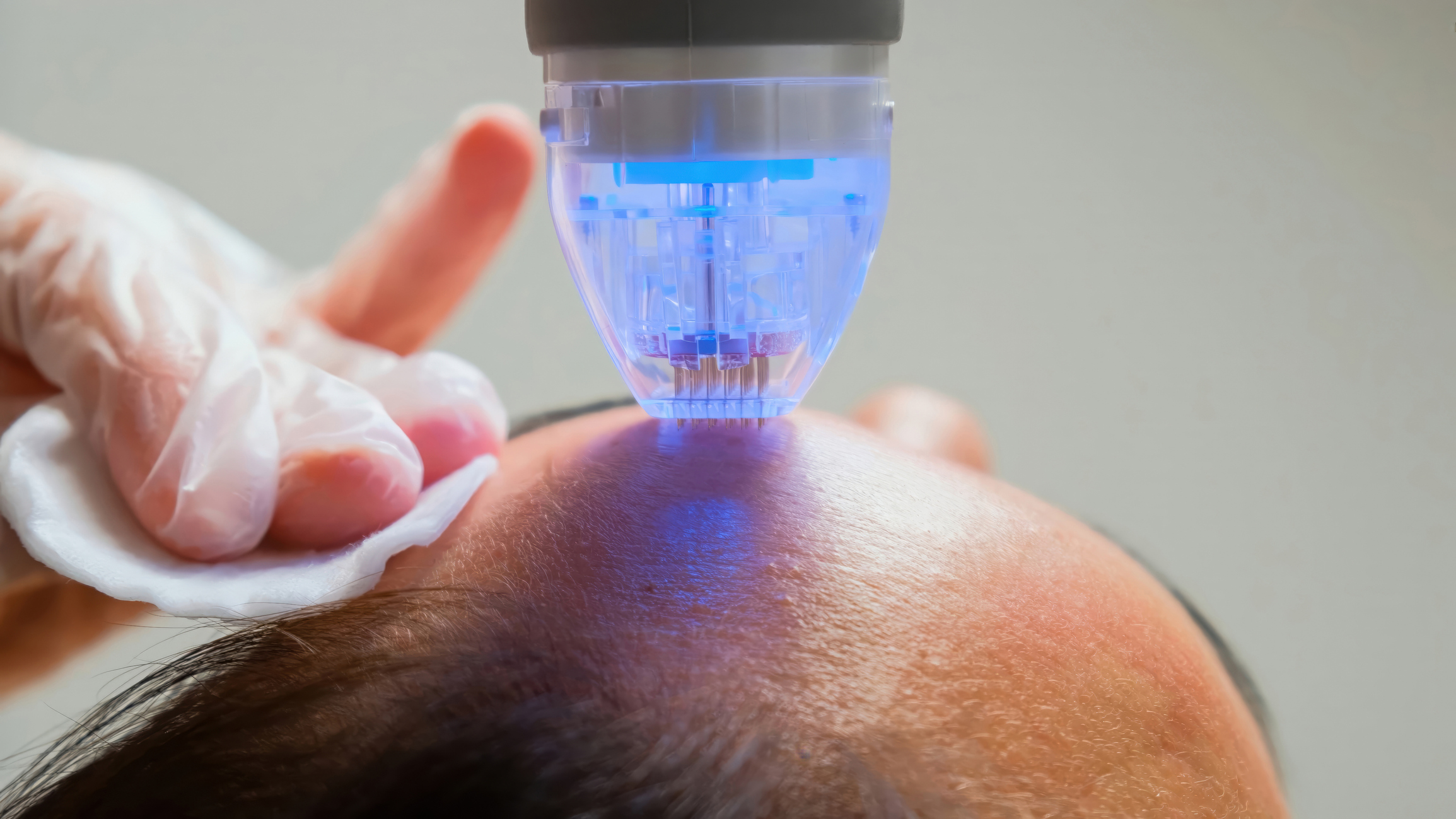
The needles enter the skin at a set depth. Then the device delivers radiofrequency energy through or around them, depending on the design. This process heats the tissue in a more targeted way than surface-only RF treatments.
That heat matters because it helps drive dermal remodeling. Reviews of the technology describe this as a collagen-focused repair response that can improve wrinkles, texture, pores, and some forms of scarring.
Not all devices work the same way, though. Some use insulated needles. These concentrate more energy deeper in the skin and spare more of the surface. Others use non-insulated needles, which spread more heat along the needle path. That difference affects depth, downtime, and risk.
What results does RF microneedling improve?
This is where RF microneedling has a stronger case than many beauty tech categories. A major review found support for several uses, including facial rejuvenation, acne scars, acne, stretch marks, melasma, rosacea, cellulite, and some hair-loss applications.
Still, the best-supported results are more specific than the broad claims often seen in ads. The clearest benefits show up in four areas:
- Texture refinement
- Acne scar improvement
- Fine line and wrinkle softening
- Mild-to-moderate skin tightening
The timeline also matters. RF microneedling does not work like a one-day transformation. Collagen remodeling takes time. Reviews note that improvement can continue for months after treatment.
Some published results help ground expectations. In one lower face and neck study, fine lines, wrinkles, folds, and furrows improved by around 30%, while neck contour improved by around 20%. In another facial rejuvenation study, pore visibility and spots fell, water loss through the skin barrier dropped by 18.44%, and skin density rose by 44.41% after a treatment series.
Those numbers are encouraging, but they do not support every claim equally.
How we would rate the main claims
- ✅ Stronger support: acne scars, surface texture, fine lines, wrinkles, and moderate tightening.
- ⚠️ More mixed: contouring, fat reduction, and stronger lifting claims. These depend heavily on the device, depth, and treatment settings.
- ❌ Too aggressive for the evidence: “facelift-like” results from one session or claims that a home device can match clinic-grade treatment.
Is it better than regular microneedling?
In many cases, yes. RF microneedling adds heat to the treatment, and that added heat can strengthen the remodeling response. That is the whole reason the hybrid category exists.
This does not make regular microneedling useless. It simply means RF microneedling aims for a different result profile. If the goal includes tightening as well as texture change, RF microneedling usually has the stronger argument.
Clinic RF microneedling and home devices are not the same
Most of the strong evidence in this category comes from professional systems used in clinics. These devices reach deeper layers, use higher energy, and allow trained operators to adjust settings by treatment area.
That matters because the face is not one uniform surface. Different areas need different depths and settings. The professional literature reflects that.
Home devices sit in a different category. They need to be gentler for safety reasons. That lower ceiling changes the result ceiling too. A home RF device may offer some anti-aging benefit, but that is not the same as clinic RF microneedling.
So when a consumer device borrows the language of RF microneedling, consumers should slow down. The name may sound similar, but the treatment power and likely outcome can be very different.
| Setting | What it usually offers |
|---|---|
| Professional RF microneedling | Deeper treatment, stronger remodeling, better support for scars, texture, wrinkles, and tightening |
| Home RF device | Milder anti-aging support at best; not a replacement for clinic-grade RF microneedling |
Who tends to benefit most?
RF microneedling fits best for people dealing with acne scars, uneven texture, enlarged pores, early laxity, and wrinkles linked to collagen loss.
It also has an advantage over some resurfacing treatments in darker skin tones. Reviews note that RF microneedling can be used safely in darker phototypes, especially when device design limits excess surface injury.
That does not mean everyone is an ideal candidate. Treatment choice still depends on skin tone, healing tendency, aftercare, and the skill of the person using the device.
When should someone pause?
A few situations call for more caution. Active infection is one. Recent heavy sun exposure is another. Poor aftercare can also raise the risk of pigment issues and prolong recovery.
The treatment also depends heavily on operator judgment. A strong device only helps when someone uses it well. Depth, energy, and technique all matter.
Reported side effects include redness, swelling, bruising, discomfort, temporary grid marks, and post-inflammatory hyperpigmentation in some cases. Most reactions are temporary, but the risk rises when settings are off or aftercare slips.
What should you check before buying or booking?
If you are booking an in-office treatment:
- Ask what device the clinic uses.
- Ask whether it is FDA-cleared for the indication being discussed.
- Ask how many sessions they usually recommend for your concern.
- Ask how they adjust depth and energy by treatment area.
- Ask about downtime, pigment risk, and sun precautions.
If you are looking at a home device:
- Check whether it is true RF microneedling or a softer RF device borrowing clinic language.
- Look for published evidence on the specific product, not just on RF as a broad category.
- Be careful with brands that imply clinic-level tightening from a much lower-powered tool.
Conclusion
RF microneedling has real scientific support behind it. It can improve acne scars, skin texture, fine lines, and moderate laxity when used well. But the strongest results come from professional systems, not from softer home versions that borrow the same terms. That gap explains most of the confusion around this category. The safest way to read the market is to separate clinic evidence from home-device promises, then judge the claim by the device in front of you.
Sources
- “Radiofrequency Microneedling: Technology, Devices, and Indications in the Modern Plastic Surgery Practice”; https://pmc.ncbi.nlm.nih.gov/articles/PMC11181949/
- “Radiofrequency Microneedling: A Comprehensive and Critical Review”; https://pubmed.ncbi.nlm.nih.gov/33577211/
- “Procedure and results on lower face and neck rejuvenation using a temperature-controlled bipolar fractional radiofrequency microneedling device”; https://onlinelibrary.wiley.com/doi/full/10.1002/lsm.23517
- “Biometric changes of skin parameters in using of microneedling fractional radiofrequency for skin tightening and rejuvenation facial”; https://onlinelibrary.wiley.com/doi/10.1111/srt.12887
- “Effectiveness of a Radiofrequency Device for Rejuvenation of Aged Skin at Home: A Randomized Split-Face Clinical Trial”; https://pmc.ncbi.nlm.nih.gov/articles/PMC9021338/