
Main Takeaways
- A skincare fridge is a nice extra, not a must-have. Most skincare is made to be kept at room temperature, so a cool, dry cupboard works for most products.
- The best reasons to buy one are simple: you enjoy chilled masks, mists, or facial tools, or you own a product that needs refrigeration.
- Decide what you’ll store before you pick a fridge. Consider bottle height, temperature settings, noise, cleaning, etc.
If you already love the feeling of a cold sheet mask or a chilled facial roller, a skincare fridge makes that routine easier and more enjoyable. If you’re hoping it will make your whole routine work better, it probably won’t do that. Cold storage changes how a product feels and, for a few formulas, how long it lasts. It doesn’t make most ingredients stronger.
In this guide, we cover what a skincare fridge does, what you can keep in it, and what to look for if you decide to buy one.
What Is a Skincare Fridge?
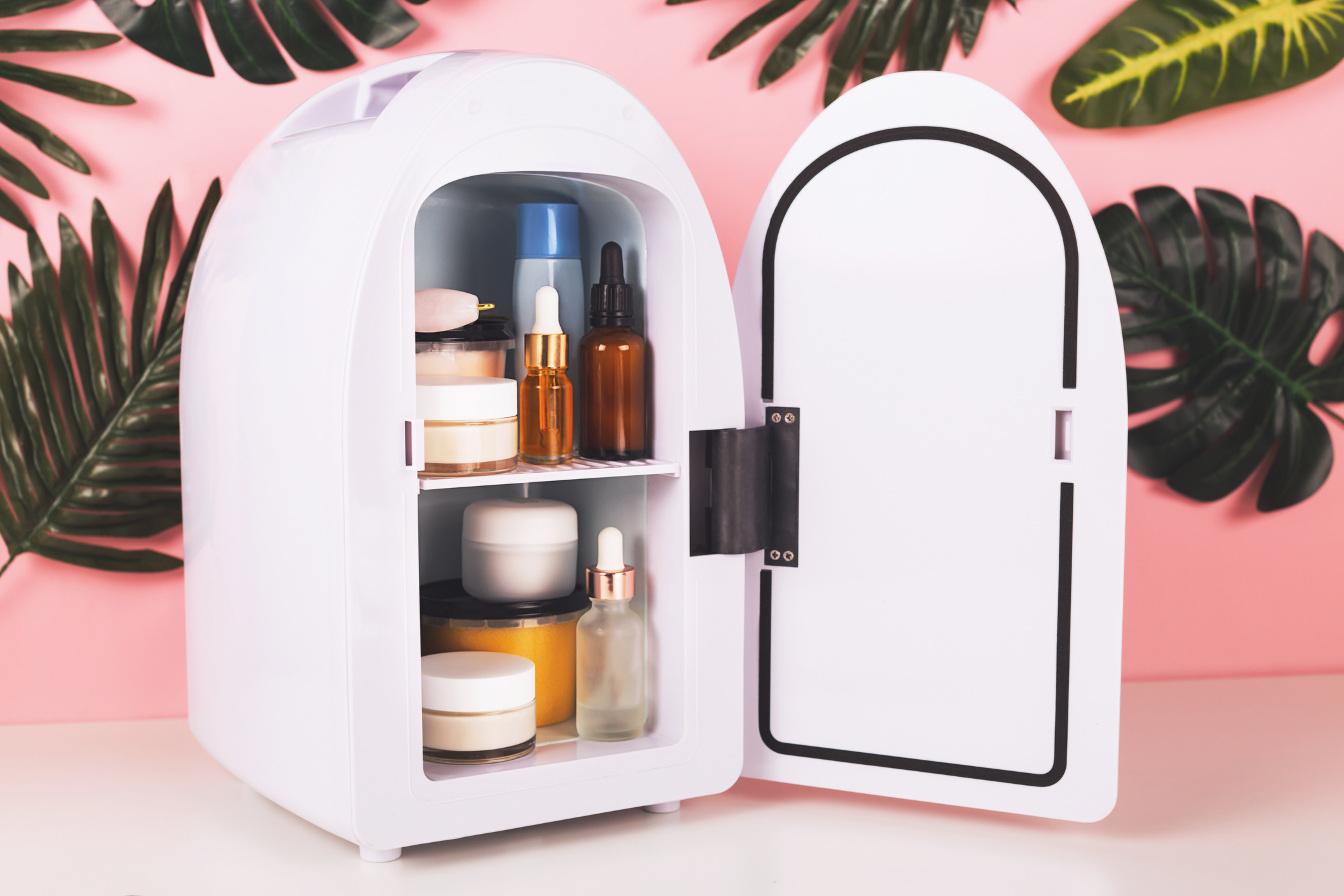
A skincare fridge is a small refrigerator for beauty products and tools. Some are designed specifically for skincare, with shelves and door compartments sized for bottles, jars, and masks. Others are general mini coolers marketed to beauty fans.
The Cooluli Beauty 12L is a typical example of the type. It has removable shelves, a drawer, and door compartments, and the brand says it holds a steady 50°F (10°C). Many of these units use thermoelectric cooling, which has no compressor and tends to run quietly. Their cooling power is also limited, which is worth keeping in mind when you compare models.
What a Skincare Fridge Can Do for You
Make your products feel refreshing
This is the main reason people love them. Cold products feel soothing, especially on warm days or first thing in the morning. The main benefit is how products feel on your skin. Cooling can also temporarily ease puffiness. Cold compresses are a common home remedy for under-eye bags, for example.
Keep your routine within reach
A small fridge on your vanity means your chilled products are right where you use them. You don’t have to go to the kitchen or share space with groceries. This works best when you use chilled products regularly. If you like to use a cold mask or roller a few times a week, the convenience adds up quickly.
Store products that need refrigeration
Some products list refrigeration in their directions. The Ordinary Retinol 0.5% in Squalane, for example, says to refrigerate after opening and use within 3 months. If you own products like this, a small fridge keeps them cold without taking up room in the kitchen. Always follow the instructions printed on your own bottle.
What Can You Keep Inside?
Check the label first, then use this guide as a rough starting point.
| Product or tool | What to know |
|---|---|
| Products labeled “refrigerate after opening” | Follow the directions on the packaging. |
| Sheet masks and hydrogel masks | Popular choices for chilled use if the instructions allow it. |
| Facial mists, toners, and eye creams | Many people enjoy them cold. Check the label for storage advice first. |
| Facial rollers or gua sha tools | Chill them if the material and care instructions allow it. |
| Vitamin C and retinoid products | Storage varies by product, so check the label. |
| Moisturizers, oils, clay masks, and makeup | Usually fine in a cool cupboard. Cold can make thick formulas harder to apply. |
If a label only says “store in a cool, dry place,” a cupboard away from heat and sunlight does the job. If you’re unsure, the brand’s customer service can usually tell you what’s safe.
Does Refrigeration Make Skincare Last Longer?
Only if the formula calls for it. Shelf life depends on how a product is made, packaged, and handled. Heat, moisture, and bacteria all shorten it, and the FDA notes that improper storage can reduce a cosmetic’s performance and safety.
For products that don’t need refrigeration, a fridge doesn’t add months to their life. Expiry dates and “use within” labels still apply, even for refrigerated products. Clean hands, closed lids, and clean containers help products last longer than a cold shelf does.
What Temperature Do You Need?
For optional chilling, a cool but not freezing temperature is all you need. For products with specific instructions, follow the label. When you compare fridges, check what the cooling specification means. Some fridges hold a set temperature. Others cool a certain number of degrees below room temperature, so a hot room can limit how cold they get.
Look for these details before buying:
- Whether the temperature is fixed or adjustable
- How performance changes with room temperature
- How much space the unit needs around its vents
- Whether it meets the storage needs of your products
Can You Use Your Kitchen Fridge Instead?

Yes, for many products. A regular fridge works for items you want chilled, as long as the product’s instructions allow it and you keep skincare away from food.
The downside is convenience. A kitchen fridge is usually colder than a beauty fridge, and some creams and gels turn thick or hard to spread when they get very cold. A small fridge can solve that.
What to Look for When Buying
Space that fits your products
Measure your tallest bottle and look at how the shelves are arranged. Capacity in liters doesn’t tell you whether a pump bottle will stand upright. Removable shelves and door compartments make it easier to fit different shapes.
Quiet operation
If it will sit beside your bed or desk, check the noise level in current reviews for that specific model.
Airflow and placement
Check the manual for ventilation requirements. Small coolers usually need clear space around the vents, so a tight shelf or cubby might not work.
Easy cleaning
Choose a fridge with removable shelves and an interior you can easily wipe down. Moisture from cold storage builds up over time, and if a fridge is hard to clean, you’ll stop cleaning it.
Running costs and support
Look at the power rating, warranty length, and return policy. Together with the price, these give you the real cost of ownership.
Is a Skincare Fridge Worth Buying?
It’s a good buy if you already know how you’ll use it. If you enjoy cold masks, mists, or tools, it gives them a dedicated spot and makes your routine more fun.
It’s a lower priority if you mainly want better skincare results. Most products don’t need refrigeration, and cold storage doesn’t improve how they work. A cool cupboard is enough for most routines. If your main worry is a warm bathroom, try moving your products to a cooler, drier spot first.
We recommend choosing what you’ll store first, then finding a fridge that fits it. That way you end up with something you’ll actually use.
Frequently Asked Questions
Should vitamin C serum go in the fridge?
It depends on the product. Check the label, since formulas differ. If the brand recommends refrigeration, follow that. If it doesn’t, a cool cupboard is fine.
Does every retinol need refrigeration?
No. Some do, and many don’t. Follow the directions on yours.
Will a cold eye cream reduce puffiness?
The cool temperature can temporarily ease swelling, like a cold compress. Puffiness has many causes, so results vary from person to person.
Should I leave a skincare fridge running all the time?
If you store products that need refrigeration, yes. Turning it off would mean they stop staying cold. For optional chilled items, follow the fridge’s instructions and run it when you want things cold.
What if I’ve stored a product in the heat?
Look at the label and the product itself. Heat can change a formula’s texture, smell, or performance. When in doubt, ask the brand or replace it.