Main Takeaways
- A shower filter and a water softener are not the same product.
- Most shower filters do not meaningfully soften hard water because they do not remove enough calcium and magnesium.
- Hard water can contribute to mineral residue, dull-feeling hair, and cleansers that feel difficult to rinse.
- Chlorine reduction is useful in some situations, but it’s not a guaranteed fix for frizz, eczema, hair loss, acne, or every scalp concern.
- Identify whether hardness, chlorine, sediment, old plumbing, or a skin condition is the likely issue before buying anything.
You move to a new apartment, and suddenly your hair feels rougher. Shampoo seems harder to rinse, your skin feels tight after a shower, and white scale begins appearing around the showerhead. Then you see filtered showerheads on your social media feed, promising softer hair, calmer skin, and better water in minutes.
A shower filter could be very helpful, but only if it addresses the problem actually in your water. The biggest source of confusion is that filtering and softening are often treated as though they mean the same thing. They do not.
This guide explains what shower filters can realistically do for hair and skin, where the hard-water claims become overstated, and when a filter may not be the right solution.
Filter vs. Softener: The Difference
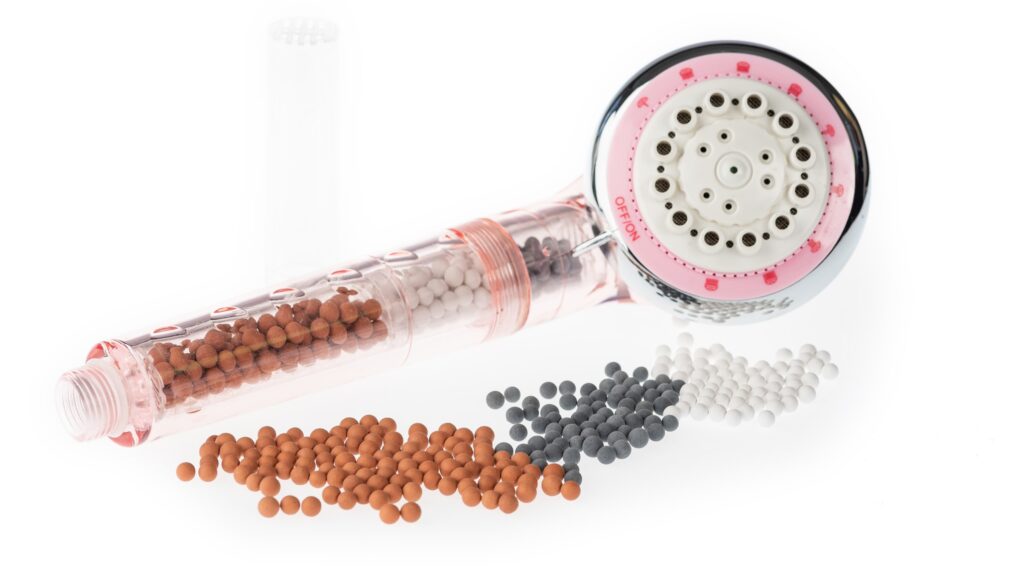
A shower filter is usually installed between the pipe and showerhead, or built into a showerhead. Depending on its filter media and stated performance, it may be designed to reduce free chlorine, sediment, odor-related compounds, or certain particles. That does not mean every shower filter reduces every contaminant, so product-level specification matters.
A water softener has a different job. Water hardness comes largely from dissolved calcium and magnesium. A true cation-exchange water softener reduces those hardness minerals by exchanging them for sodium or potassium ions. That process is what addresses the mineral buildup behind scale on fixtures, soap scum, and the familiar “hard water” problem.
The distinction is important because a filter marketed as “softening” may not actually remove enough dissolved calcium and magnesium to change water hardness in a meaningful way. If white scale keeps collecting on faucets, tiles, or the showerhead, water hardness may be contributing to the way your hair and skin feel after showering.
What Hard Water Can Do to Hair
Hard water will not explain every frustrating hair day. Frizz, breakage, color fading, dryness, and shedding can all have several causes. But minerals in hard water can interact with shampoo and soap, potentially leaving residue that makes hair feel coated, dull, stiff, or difficult to condition.
People often describe the result as hair that never feels fully clean, even after shampooing, or hair that feels rougher despite using richer conditioners. Mineral-related buildup can also make styling products seem less effective. Color-treated or highly porous hair may make these changes feel more noticeable, but water hardness should not automatically be blamed for every texture or color concern.
Before buying a device, try to separate a water issue from a routine issue. Useful clues include:
- Persistent white scale on fixtures or the shower glass
- Shampoo that seems difficult to rinse completely
- Soap that does not lather as expected
- Hair that feels coated shortly after washing
- A clear change in hair feel after moving to a new area
A local utility report or an inexpensive hardness test can be very informative and helpful. If mineral buildup is the main concern, occasional chelating or clarifying shampoo may help, but overusing one can be drying for bleached, fragile, or already dry hair.
What Hard Water Can Do to Skin
Hard water does not cause every case of dry skin, acne, rosacea, or eczema. But it could be a relevant cause for some people with sensitive or eczema-prone skin.
The likely concern is not that minerals “clog pores.” Instead, hard water can interact with cleansers and make it harder to rinse away surfactant residue completely. This can be especially frustrating if skin already feels dry, tight, or reactive after bathing.
Research on the topic is still developing. A study found an association between living in hard-water areas and prevalent eczema, but an association does not show that hard water caused an individual’s eczema. Earlier experimental research discussed in that study suggests hard water may increase the deposition of sodium lauryl sulfate from cleansers and contribute to skin-barrier stress.
If your skin feels dry or irritated after showering, the best first steps are usually:
- Keep the water comfortably warm rather than very hot
- Use a gentle cleanser instead of trying to scrub away a coated feeling
- Apply moisturizer after bathing while skin is slightly damp
- Simplify the rest of your routine before adding several new products
- Seek professional advice for persistent itching, rashes, or eczema flares
When a Filter Is Not the First Fix
It’s easy to blame water when hair or skin suddenly changes, but it is not always the first variable to investigate. A new shampoo, a stronger skincare active, seasonal humidity, frequent swimming, heat styling, color treatment, medication changes, or an irritated scalp can all affect how you look and feel after a shower.
If the problem began after you move to a new place, for example, compare your experience with visible clues such as scale, water odor, or a utility report. If no water clue is present, simplify your routine before adding a filter and several new products at once. This makes it easier to see what is actually helping and prevents a water-quality theory from masking a real skin or hair concern.
Will You Benefit From a Shower Filter?
A shower filter is worth trying when the concern matches what the filter is actually designed to reduce. That could include a noticeable chlorine-like smell, visible sediment, rust-colored particles, or a clear change in the shower experience after moving.
It can be a reasonable trial if you can find a product that is transparent about its tested reduction claims, cartridge life, and replacement schedule. A filter can also be appealing when a whole-home solution is not possible because you rent or only want to address shower water.
Set expectations carefully. A typical filter may be less likely to meet your goals if:
- Your main concern is obvious hard-water scale
- You want it to solve persistent eczema, acne, rosacea, or hair shedding
- You expect it to replace a true water-softening system
- You are buying based only on “detox,” “beauty water,” or vague “soft water” language
What to Check Before Buying
Treat a shower filter as a water-treatment product. Before you buy, check:
- The stated reduction claim: Does the product specify chlorine, sediment, metals, odor, or another contaminant?
- Testing or certification: NSF/ANSI 177 is the certification standard for shower filters that reduce free available chlorine. It does not establish that a filter softens hard water.
- Cartridge replacement: How often does it need changing, and what will that cost over a year?
- Water pressure: Will the filter make a low-pressure shower feel weaker?
- Your local water: Review the local water-quality report, or use a basic test if hardness is your concern.
- The word “softening”: Does the brand explain a genuine hardness-reduction process, or is the term simply there for marketing?
Use the same skepticism you would bring to any beauty-tech claim: look for a specific mechanism, a measurable claim, and documentation that matches the promise.
Conclusion
Shower filters can be useful, but they are not a guaranteed fix for your hair or skin concerns. A well-matched filter could improve the shower experience when chlorine, sediment, or another stated contaminant is the issue. But if you are dealing with obvious scale, shampoo that never seems to rinse, or mineral residue on fixtures, a typical filtered showerhead may not address the calcium and magnesium behind the problem.
Before spending money, investigate your water first. The right solution depends on what is actually coming out of your tap—not the broadest beauty promise on the packaging.