
Walk into any beauty aisle and you’ll find cleansing devices in every shape, material, and price range — all promising a deeper, better clean. The problem is that “cleansing device” covers three genuinely different technologies that work differently, clean differently, and suit different skin types entirely. Here’s how to tell them apart before you spend a cent.
The 3 Types at a Glance
| Device Type | Cleaning Method | Best For | US Price Range |
|---|---|---|---|
| Silicone Brush | Soft sonic pulsations via flexible silicone nodes | Sensitive, dry, normal skin | $30 – $200 |
| Nylon Bristle Brush | Mechanical oscillation via firm bristles | Oily, combination, thicker skin | $20 – $150 |
| Ultrasonic Spatula | High-frequency sound waves (25,000–30,000 Hz) | Oily, congested, blackhead-prone skin | $25 – $100+ |
Prices sourced from current US retail listings.
Type 1: Silicone Brush

Silicone cleansing devices use soft, flexible nodes that oscillate against the skin at around 200–350 vibrations per second, loosening surface dirt, oil, and makeup residue without mechanical abrasion. Because silicone is non-porous, it does not trap bacteria or dead skin cells the way nylon bristles do — making it a more hygienic long-term option that requires no replacement heads.
A study found that twice-daily sonic brush cleansing produced measurable improvements in mild-to-moderate acne without adverse events. A separate study confirmed that sonic cleansing did not cause significant reduction in skin hydration, suggesting better preservation of the skin barrier compared to manual washing.
What it won’t do: Silicone brushes are not strong exfoliators. For stubborn congestion or deep pore cleansing, the gentle pulsation may not deliver enough action.
Best for: Sensitive, dry, and normal skin. Also ideal for anyone wanting a daily-use device with zero maintenance costs.
Type 2: Nylon Bristle Brush
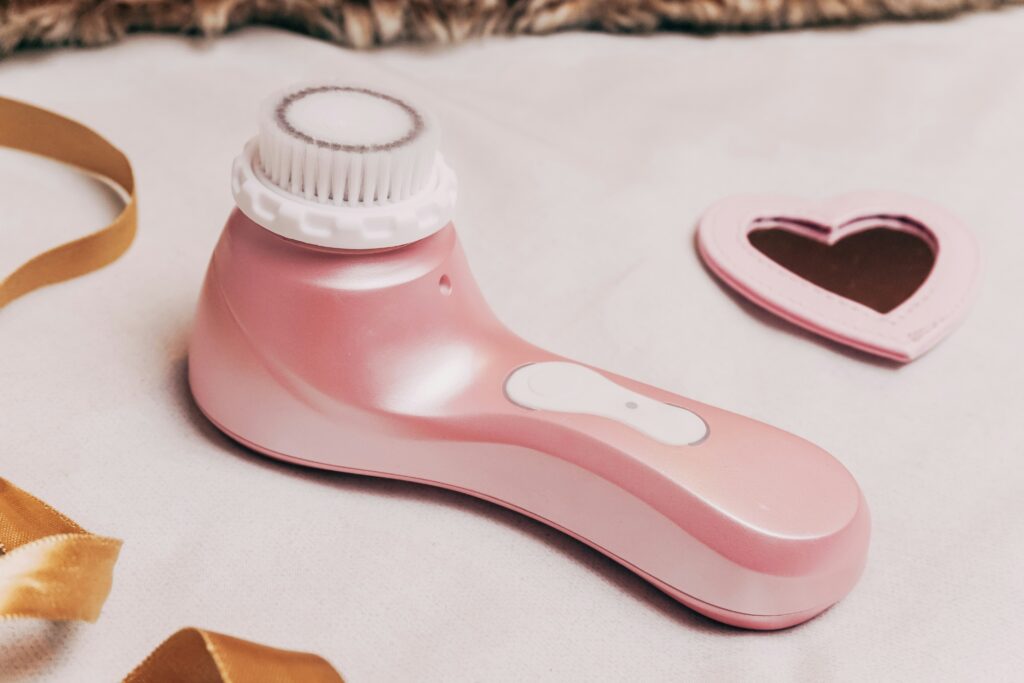
Nylon bristle brushes use motorized oscillation, typically 10,000 to 30,000 oscillations per minute, to move firm bristles across the skin. The direct contact between bristles and skin provides a level of mechanical exfoliation that silicone simply cannot match, making them effective for removing dead cell buildup, improving texture, and unclogging oily pores. Dermatologists describe them as essentially “electric toothbrushes for the face.”
The risks are equally well-documented. Overuse disrupts the skin’s pH and depletes the protective acid mantle, which can lead to increased oil production, chronic inflammation, and microabrasions to the stratum corneum, which is the skin’s outermost protective layer.
What it won’t do: Not suitable for sensitive, dry, or compromised skin, and should never be used daily.
Best for: Oily, combination, and thicker skin types. Not recommended for sensitive skin, active acne, rosacea, or eczema. Maximum 2–3 times per week.
Type 3: Ultrasonic Spatula
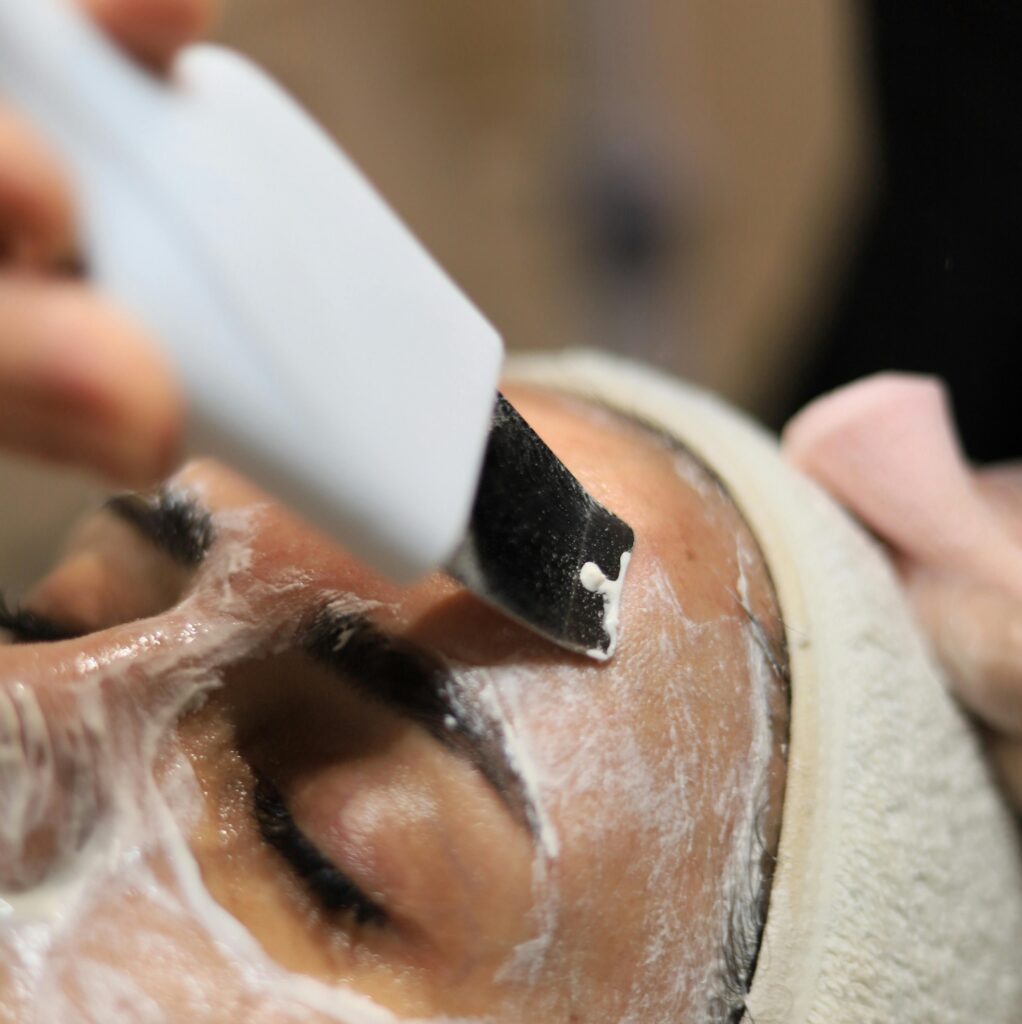
The ultrasonic spatula is the most technically distinct of the three. Rather than scrubbing the skin, it uses a flat metal blade vibrating at 25,000–30,000 Hz to create a process called acoustic cavitation — microscopic pressure fluctuations in the water on the skin’s surface that dislodge sebum and debris from within the pore environment. Most devices also have an infusion mode that uses the same vibrations to drive serums deeper into the skin.
Because it requires no physical friction, it is considered non-abrasive, which is a meaningful advantage over nylon brushes for users concerned about barrier damage. That said, independent peer-reviewed clinical trials on consumer-grade ultrasonic spatulas remain limited, and claims around deep product infusion are still emerging rather than conclusively proven.
What it won’t do: Not suitable for rosacea, active acne, eczema, or damaged skin, as vibrations can worsen irritation. Must be used on wet skin, because ultrasonic waves do not transmit through dry surfaces.
Best for: Oily, congested, and blackhead-prone skin. Particularly effective for pore extraction without the aggression of physical scrubbing.
Which One Is Right for You?
| Your Concern | Best Choice |
|---|---|
| Sensitive or easily irritated skin | Silicone brush |
| Deep pore cleansing and oily skin | Ultrasonic spatula |
| Strongest surface exfoliation | Nylon bristle brush |
| Blackheads and congestion | Ultrasonic spatula |
| Acne-prone skin (mild) | Silicone brush |
| Low maintenance preference | Silicone brush or ultrasonic spatula |
| Budget buyer | Nylon bristle brush |
Whichever type you choose, the same rule applies: let the device do the work. Pressing harder does not clean more effectively. It just increases the risk of barrier damage. Never use any mechanical cleansing device on broken, sunburned, or actively inflamed skin.
Sources
- KentDO Healthy Beauty. “Silicone vs Nylon Facial Cleansing Brush: Which One Wins the Hygiene Test.” KentDOHealthyBeauty.com. March 11, 2026. https://kentdohealthybeauty.com/blogs/body-face/facial-cleanser-brush-silicone-vs-nylon-which-one-wins-the-hygiene-test
- KentDO Healthy Beauty. “The Hidden Differences Between Sonic & Ultrasonic Facial Brushes.” KentDOHealthyBeauty.com. July 8, 2025. https://kentdohealthybeauty.com/blogs/body-face/the-hidden-differences-between-sonic-ultrasonic-facial-brushes
- NiceMay Beauty. “All You Need to Know About Silicone Facial Cleansing Brushes.” NiceMayBeauty.com. September 8, 2023. https://nicemaybeauty.com/all-you-need-to-know-about-silicone-facial-cleansing-brushes/
- PubMed / NCBI. “A Cohort Study Using a Facial Cleansing Brush With Acne Cleansing Brush Head.” Gold MH et al. Journal of Drugs in Dermatology. November 1, 2019. https://pubmed.ncbi.nlm.nih.gov/31741359/
- PubMed / NCBI. “Skin Effect of Facial Cleansing Combined With an Electric Sonic Device.” Journal of Cosmetic Dermatology. February 21, 2021. https://pubmed.ncbi.nlm.nih.gov/33619809/
- Alamo Heights Dermatology. “Dermatologists Take on Popular Trends: Facial Cleansing Brushes.” AlamoHeightsDerm.com. July 14, 2022. https://alamoheightsderm.com/dermatologists-take-on-popular-trends-series-facial-cleansing-brushes/
- Skin Ink Laser. “Can a Facial Cleansing Brush Be Harmful to Your Skin?” SkinInkLaser.com. November 17, 2024. https://skininklaser.com/can-a-facial-cleansing-brush-be-harmful-to-your-skin/
- Topical Skin. “Why Dermatologists Warn Against Over-Exfoliation.” TopicalSkin.com. March 5, 2026. https://topicalskin.com/blogs/skincare-news/why-dermatologists-warn-against-over-exfoliation
- PMC / NCBI. “Skin 101: Understanding the Fundamentals of Skin Barrier Function.” Journal of Clinical and Aesthetic Dermatology. February 2025. https://pmc.ncbi.nlm.nih.gov/articles/PMC11896616/
- KentDO Healthy Beauty. “Ultrasonic Skin Scrubber: Dermatologist Advice.” KentDOHealthyBeauty.com. March 7, 2026. https://kentdohealthybeauty.com/blogs/body-face/who-should-not-use-an-ultrasonic-facial-tool-dermatologist-explains
- The Editorialist. “The Best Ultrasonic Skin Scrubbers for Clear, Radiant Skin.” Editorialist.com. May 6, 2026. https://editorialist.com/beauty/best-ultrasonic-skin-scrubbers/
- Glamour. “8 Best Facial Cleansing Brushes 2026, Approved by Dermatologists.” Glamour.com. 2026. https://www.glamour.com/story/best-facial-cleansing-brushes
- Yahoo Lifestyle. “How, When, and Why to Use a Facial Cleansing Brush.” Yahoo.com. January 20, 2016. https://www.yahoo.com/lifestyle/how-when-and-why-to-use-a-facial-cleansing-brush-031937570.html