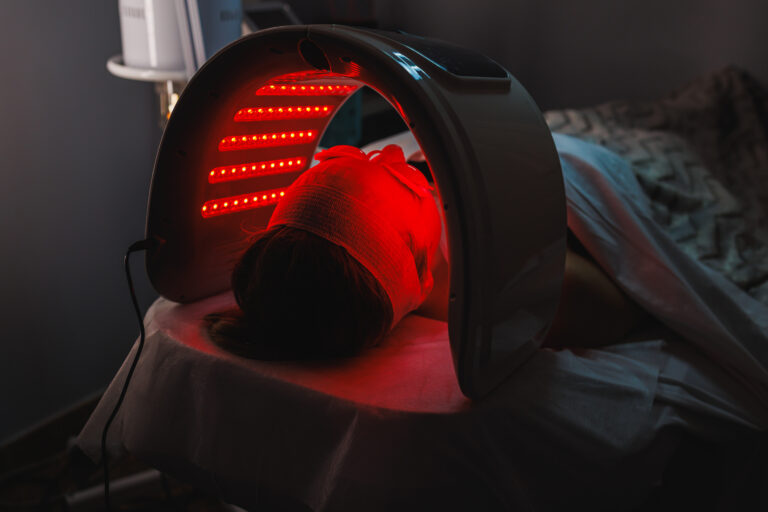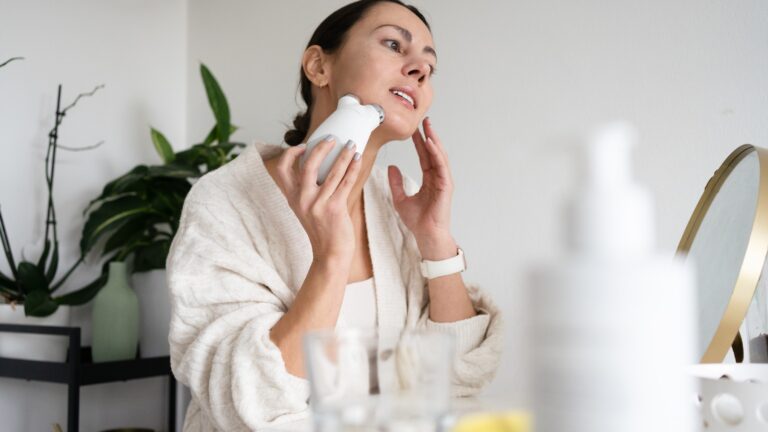
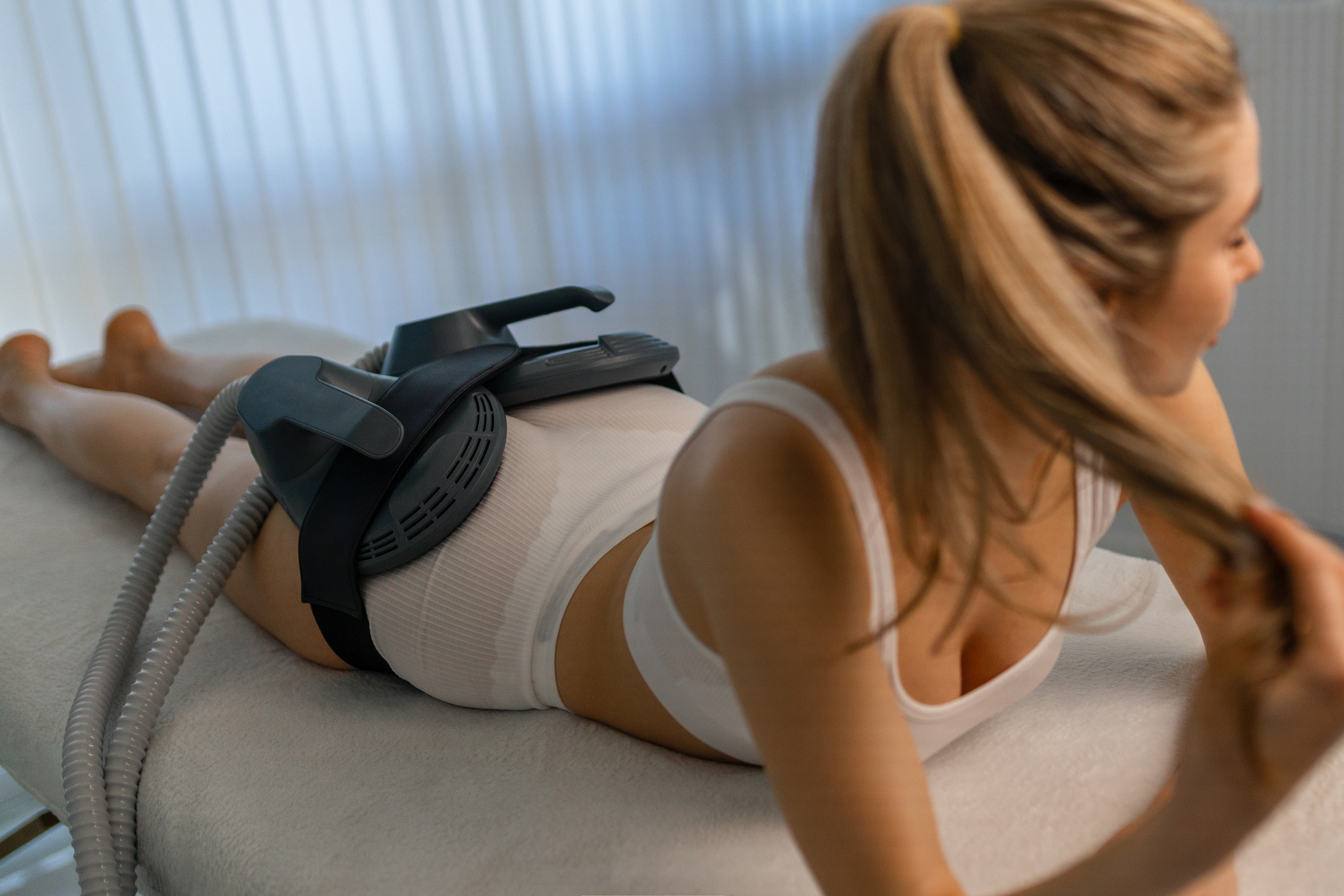
A device promises tighter skin. A clinic advertises a more toned stomach. Another treatment offers fewer inches around the waist. They all sound like body contouring, but they are not necessarily changing the same thing.
Skin firmness, muscle tone, localized fat, and cellulite are different concerns. A treatment that improves one can leave another largely unchanged. That is why choosing by technology name alone—RF, ultrasound, muscle stimulation, or fat freezing—is not the most useful starting point.
This guide covers the main non-invasive body-contouring devices used at home and in professional settings. It explains what each category targets, what results are realistic, and what to check before buying a device or booking a treatment.
Main Takeaways
- Skin firming, muscle toning, fat reduction, and cellulite smoothing are different outcomes.
- Home devices and professional equipment are not interchangeable, even when they use similar terminology.
- Circumference changes and dramatic photos alone do not prove fat reduction.
- Most non-invasive treatments produce gradual, localized changes—not weight loss or a surgical-level transformation.
- Start with your goal, then compare the evidence, treatment commitment, risks, and total cost.
First, What Do You Want to Change?
“Body sculpting” is an umbrella term. Before comparing options, identify the result that matters to you.
| Your main concern | Look for evidence of | Do not automatically assume |
|---|---|---|
| Mildly loose or crepey-looking skin | Skin tightening or improved firmness | Tighter-looking skin means less fat |
| Muscle firmness or definition | Muscle strengthening, toning, or appearance changes | Muscle contractions guarantee visible abs |
| A localized, pinchable fat bulge | Reduction in subcutaneous fat | A smaller bulge means overall weight loss |
| Dimpling on thighs or buttocks | Improvement in cellulite appearance | Fat reduction removes cellulite |
These concerns often overlap. For example, you can have both loose skin and a fat bulge. Reducing the bulge does not necessarily tighten the skin covering it.
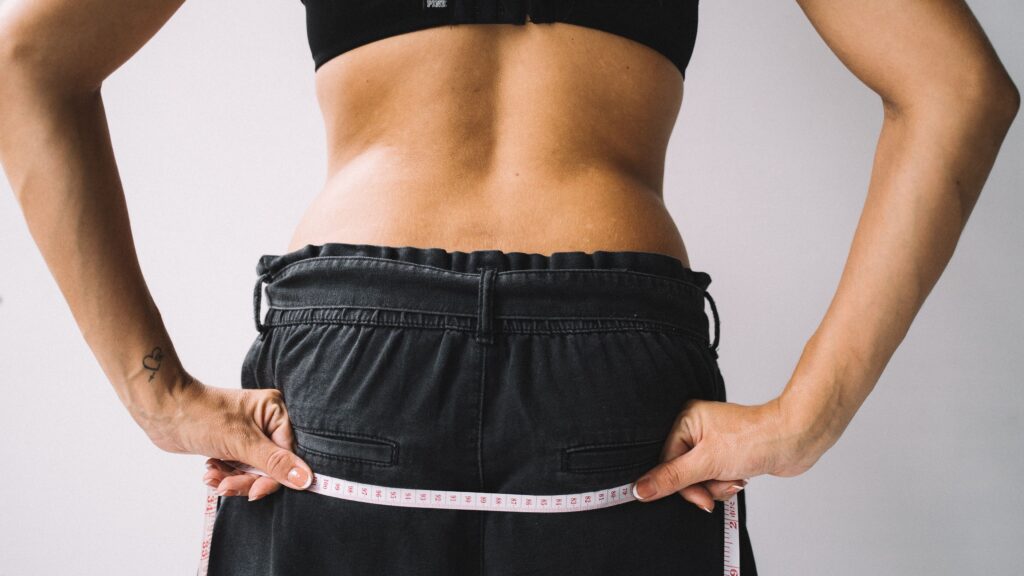
Nonsurgical fat reduction addresses localized fat deposits using technologies such as cooling or heat. It is not a treatment for obesity, and it does not replace liposuction when someone needs a larger or more comprehensive change. Also be careful with “inches lost.” A tape measurement records circumference, not the tissue responsible for the change. Ask whether a study measured fat thickness, muscle, skin appearance, circumference, or simply satisfaction.
For Skin Firming: Radiofrequency Devices
Radiofrequency, or RF, generates heat in tissue. For skin-tightening treatments, the aim is to support changes in collagen and other structures that help skin feel and look firmer.
RF skin tightening is used on the body and the face. It suits mild laxity better than significant sagging, and improvements develop gradually as the skin responds to treatment.
Home RF versus professional RF
The label “RF” doesn’t indicate treatment depth, heating patterns, safety controls, or expected results.
Professional systems differ widely. Some focus on skin tightening; others target cellulite or fat; some combine RF with suction, massage, or muscle stimulation. Home products need their own evidence for body use rather than borrowing results from a clinic machine or facial device.
Before buying or booking, check:
- The exact body areas the device treats
- Whether the claim concerns firmness, cellulite, circumference, or fat
- How many sessions are recommended
- Whether maintenance is expected
- Required gels, consumables, or other ongoing costs
The distinction between RF firming and fat-reduction claims matters here. A tightening result is not proof that a device reduces fat.
Treatment should not become a test of how much heat you can tolerate. Excessive heating can cause burns. For professional treatment, choose an experienced provider; for home use, follow the instructions and stop if you feel burning rather than ordinary warmth.
For Muscle Toning: EMS and Magnetic Stimulation
Muscle-stimulation devices trigger contractions, but home EMS and professional magnetic systems deliver that stimulation differently.
Home EMS
Electrical muscle stimulation uses electrodes on the skin to deliver current. Depending on the device and protocol, it can support muscle strengthening or toning.
However, contracting a muscle is not the same as removing the fat covering it. A home belt is not a shortcut to visible abdominal definition or a replacement for exercise. The evidence and intended use must match the exact product.
If the terminology feels confusing, learning the differences between EMS, microcurrent, and TENS helps explain why electrical devices aren’t interchangeable.
Consider the practical side, too: electrode placement, comfort, replacement pads, and the time required for repeated sessions. A strong contraction alone doesn’t guarantee better final results.
Professional magnetic stimulation
Professional systems use changing magnetic fields to induce currents that stimulate muscle contractions. Some combine this with RF and advertise improvements in both muscle and fat.
Clinical studies have reported changes, but the size and visibility of those changes deserve context. A systematic review of electromagnetic body-contouring treatments found modest photographic results, small imaging-measured changes, and substantial manufacturer involvement in the evidence available at the time. That review does not settle every newer device, but it is a reason to ask for realistic results rather than relying on headline percentages.
Ask the clinic whether its recommendation targets muscle appearance, fat reduction, or both. Also clarify whether the evidence concerns magnetic stimulation alone or a combined magnetic-and-RF system.
For Localized Fat Reduction: Professional Options
If your priority is a smaller fat bulge, you are making a different decision from someone buying a firming or massage tool. Relevant treatments target fat beneath the skin, not overall body weight.
Fat freezing
Cryolipolysis uses controlled cooling to damage fat cells in a selected area. The body gradually clears the affected cells, so results develop over weeks to months rather than immediately.
Fat freezing targets localized fat deposits, not overall weight loss or loose-skin removal. Treatment suitability depends on the area, the amount of pinchable fat, and medical factors that affect tolerance to cold.
It is not simply applying something cold to the body. Controlled equipment and proper placement matter. Important risks include persistent numbness, cold injury, and paradoxical adipose hyperplasia, in which the treated fatty area enlarges instead of shrinking. This complication can require surgery. The safety and effectiveness of home-use fat freezing have not been established.
Ultrasound and “cavitation”
Certain professional ultrasound systems use sound energy to affect subcutaneous fat. Depending on the system, that involves heating or mechanical disruption.
An online “cavitation” machine is not automatically equivalent to a studied clinical system. Before considering one, verify the model, intended use setting, supported areas, and relevant authorization. These are therapeutic devices, not ordinary massage tools. Burns and nerve injury are recognized risks, so don’t treat a professional-use machine as suitable for DIY use just because it is available online.
If you are familiar with ultrasound skin tightening, remember that an ultrasound treatment designed for skin firmness is not automatically a fat-reduction treatment.
Heat-based laser treatments
Certain professional lasers heat tissue to target localized fat. These differ from LED products and low-level light therapy.
“Laser lipolysis” also covers different procedures, including treatments involving a probe beneath the skin. Confirm whether the proposed option is non-invasive or requires an incision, rather than treating every laser-based service as equivalent.
Ask about expected change, treatment areas, follow-up, and eye protection. Burns and pigment changes are among the relevant risks, and suitability depends on the device, skin characteristics, and medications.
For Cellulite: Smoothing Is Not the Same as Fat Removal
Cellulite involves the relationship between skin, fat, and connective bands beneath the surface. That is why it appears even in fit people and why reducing fat does not necessarily remove dimpling.
Evidence for cellulite treatments varies by method. Acoustic-wave treatments have shown improvements after several sessions. Vacuum-assisted massage has mixed results, and when it works, it usually requires ongoing treatment.
Home rollers, suction tools, vibrating massagers, and professional acoustic-wave equipment should not be grouped together as though they produce the same result.
For a home massage device, ask:
- Do I value the massage experience itself?
- Is the cellulite claim supported by evidence for this product?
- Is the expected change temporary?
- Will I realistically maintain the routine?
- Does it cause excessive bruising or discomfort?
Temporary smoothing can still be worthwhile. The important point is to buy it for that goal, not for a promise of permanent fat removal.
What to Check Before Paying
A home device offers convenience. Professional treatment provides access to equipment and outcomes a consumer tool may not deliver. Don’t choose either based on a flattering photo alone.
Use this checklist:
- Match the evidence to the goal. Skin firmness, fat thickness, muscle changes, and circumference are different measurements.
- Check the finished device. Research on “RF” generally is not enough to validate every RF product.
- Verify the treatment setting and area. Professional use does not automatically translate to home use.
- Read regulatory wording carefully. “FDA-cleared” and “clinically proven” need context, including the model and intended outcome.
- Calculate the complete cost. Include sessions, maintenance, gels, electrodes, and other ongoing ownership costs.
- Ask about typical results. Ask for realistic examples for someone with a similar concern, not just the most dramatic transformation.
- Check follow-up arrangements. A clinic should explain who manages complications; a home purchase needs clear warranty and return terms.
Before treatment, disclose implants, pregnancy or breastfeeding, hernias, previous surgery in the area, active skin problems, and relevant medical conditions or medications. Restrictions differ by technology. The device-specific safety considerations matter more than a general claim that a procedure is “safe for everyone.”
Conclusion
Body contouring is not one outcome. A device that improves skin firmness doesn’t necessarily reduce fat. Muscle stimulation doesn’t guarantee visible definition. A massage treatment can temporarily improve the appearance of cellulite without changing body composition.
Start with the concern you want to address, then compare the specific options. Home devices suit readers who value a manageable, repeatable routine and realistic cosmetic goals. Localized fat reduction requires a treatment-specific assessment, not an impulse purchase.
The best choice is the one whose expected improvement, evidence, risks, and ongoing commitment make sense for you.
Q&A
Do body-contouring devices help you lose weight?
They are not weight-loss treatments. Some professional systems reduce small localized fat deposits, but that is different from reducing overall body weight or treating obesity. Firming and muscle-stimulation devices target different outcomes.
Are professional treatments always better than home devices?
Not for every goal. A home massage tool suits someone who wants convenient massage, while a professional system is better for supported, localized fat-reduction treatment. Compare the desired outcome and exact device.
Are body-contouring results permanent?
There is no single answer. Skin-firming and muscle-toning effects can need maintenance. Cellulite smoothing is often temporary. Fat-reduction procedures work differently, but lasting contour also depends on later body changes. Ask about the specific treatment’s follow-up evidence rather than accepting a blanket permanence claim.
Can one device firm skin, tone muscle, and reduce fat?
Some professional systems combine technologies to address multiple goals. That does not mean every “three-in-one” device delivers all three. Each advertised outcome needs supporting evidence for the exact system and protocol.