
Main Takeaways
- Facial cupping creates a temporary increase in blood flow to the treated area, which is the basis for its brightening and plumping effect
- There’s currently no solid research confirming facial cupping’s bigger cosmetic claims, like boosting collagen or reshaping facial contours, separate from general body cupping research
- Silicone cups are gentler and better for beginners; glass cups create stronger suction and carry more risk if handled incorrectly
- Technique matters more than the tool. Stationary suction causes bruising, which is why facial cupping relies on continuous, moving strokes
- Consult a professional first if you have certain skin conditions and medications
If you’ve seen some sport athletes’ round, bruise-like body marks left by cupping, facial cupping may seem unfamiliar by comparison. It’s a much gentler adaptation, built around small, mobile cups gliding across the skin rather than sitting in one spot. But how much of what it promises, tighter, brighter, more contoured skin, actually holds up? We looked at the mechanism, the tools, and what dermatologists have found so far.
A Brief History: Where Cupping Comes From
Cupping is far older than its recent wellness-world popularity. Its use as a healing practice dates back roughly 3,500 years to ancient Egypt, and it was later documented by Hippocrates in ancient Greece and by Galen in ancient Rome. It also has deep roots in Chinese medicine, appearing during the Han dynasty. Traditionally, cupping was used to treat a wide range of conditions, from pain and headaches to digestive complaints, using stationary suction left in place for several minutes at a time.
The facial version practiced today is a distinct, more recent offshoot, typically performed by an aesthetician or through home kits, and built around smaller cups moved continuously across the skin rather than the traditional stationary approach used on the back or limbs.
How Facial Cupping Works
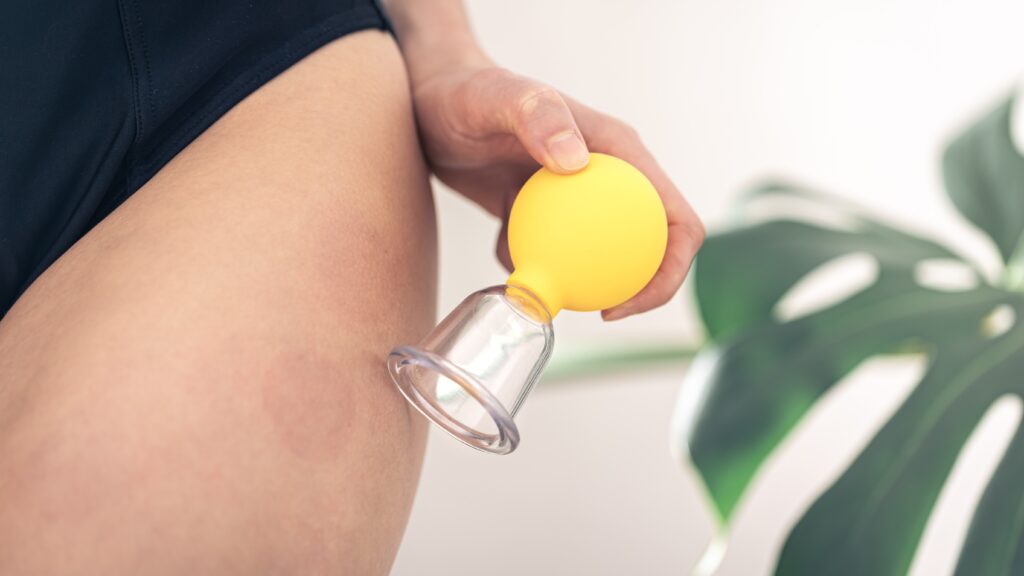
The mechanism is simple in concept: a cup creates negative pressure, gently lifting the skin and drawing blood flow toward the surface. That temporary rush of circulation is what’s behind the immediate, visible effect people notice after a session, a brighter, slightly plumper look.
Two main tool types dominate the category. Silicone cups are squeezed by hand to create suction before being placed on skin, and their softer material makes them more forgiving for delicate facial tissue and easier for beginners to control. Glass cups typically rely on a pump or heat to generate suction and produce a stronger pull, which is why practitioners recommend them for trained hands rather than home use.
What Dermatology Literature Tells Us
A 2020 study measured what actually happens during a cupping session: after just five minutes of suction, blood flow to the area jumped noticeably, confirming the circulation boost is real. But that boost didn’t last. Blood flow returned to normal within about two hours.
Beyond that, there’s no solid research confirming that facial cupping delivers the bigger claims often attached to it, like boosting collagen or reshaping facial contours. The glow and slight puffiness people notice right after a session is more likely a mild, temporary swelling response, not a lasting change to the skin.
Technique Is the Real Variable
Nearly every credible source on cupping agrees on one detail: cups need to stay moving. Stationary suction, even for a short time, is what causes the bruise-like marks associated with body cupping. Facial cupping is specifically designed around lighter, continuous, sliding motion for this reason, meaning the risk profile depends heavily on how the tool is used, not simply which type is chosen.
Safety and Who Should Skip It
Facial cupping carries a generally low but real risk profile. Documented complications from cupping broadly include bruising, blistering, burns, and skin discoloration, along with rarer but more specific dermatological concerns: reactivation of herpes simplex virus following skin trauma, and the Koebner phenomenon, where conditions like psoriasis can flare in freshly traumatized skin.
A few groups should avoid facial cupping or check with a dermatologist first: anyone with active acne, broken capillaries, rosacea, psoriasis, or eczema, those taking blood thinners, and anyone with a history of cold sores, given the herpes reactivation risk noted above.
How It Compares to Gua Sha
Facial cupping and gua sha share a lot in common: both are massage-based tools with roots in traditional medicine, both work primarily through circulation rather than structural change, and both carry a real short-term sensory and circulation effects paired with limited confirmation of the bigger cosmetic claims attached to them. If you’ve read our gua sha tools comparison, the pattern here should feel familiar: the ritual and the massage are doing a lot of the visible work.
Q&A
Does facial cupping cause bruising?
It shouldn’t if done correctly. Bruising typically results from leaving a cup in one spot too long rather than the technique itself.
Silicone or glass cups, which is better for beginners?
Silicone. It’s softer, easier to control, and creates gentler suction than a glass cup requiring heat or a pump.
How often should you use a facial cupping set?
There’s no established clinical guideline for frequency, so starting with once or twice a week and watching how skin responds could be a reasonable approach.
Sources
- “Cupping”, National Center for Complementary and Integrative Health, 2018. https://www.nccih.nih.gov/health/cupping
- “Cupping Therapy”, Cleveland Clinic, 2023. https://my.clevelandclinic.org/health/treatments/16554-cupping
- “Cupping in Dermatology”, The Hospitalist, 2022. https://community.the-hospitalist.org/content/cupping-dermatology
- “Photoacoustic Imaging of Microenvironmental Changes After Cupping Therapy”, Biomedical Optics Express, 2020. https://pubmed.ncbi.nlm.nih.gov/32499932/