Main Takeaways
- Both tools relaxed my face and reduced visible tension, just through slightly different means
- The Kitsch tool gave me more control and a deeper, more massage-like relaxation
- The Pfefe cryo tool de-puffed faster and gave a temporary (but noticeable) jawline lift the traditional tool didn’t
- Neither tool produced lasting structural change on my face, which also tracks with the research results on gua sha
- The Pfefe tool held its cold noticeably longer than the Kitsch tool did in the fridge, which ended up mattering a lot more than I expected
(Disclosure: This is not a sponsored review. The devices were purchased independently for testing.)
Gua sha has been all over my feed for a while, and then the cryo versions started showing up too. So I started wondering if the cold was actually doing anything or if it was just a nice sensory add-on. I tested the Kitsch Stainless Steel Gua Sha tool and the Pfefe White Cryo Gua Sha tool side by side for about two weeks to find out. This review covers my routine, experience, and what I actually noticed from these tools, while checking against the real scientific evidence behind gua sha and cold therapy.
A Quick History: Where Gua Sha Comes From
Gua sha isn’t a beauty industry invention. It originated in traditional Chinese medicine, with practices resembling it documented as far back as the Ming Dynasty, though some historians trace scraping-based folk remedies even earlier. The technique traditionally involved using a smooth-edged tool to scrape the skin firmly, often until light redness or petechiae appeared, based on the belief that this released “stagnation” and improved qi and blood flow.
Modern gua sha, especially the version popularized in skincare, is a much gentler adaptation. The firm scraping motion has been replaced with light gliding pressure, and the goal shifted from traditional medicine to cosmetic massage — improved circulation, lymphatic drainage, and muscle tension relief. It’s worth knowing this distinction going in, since a lot of the more dramatic historical claims (releasing toxins, curing illness) don’t carry over to the light facial version most of us are actually using.
The Two Gus Sha Tools
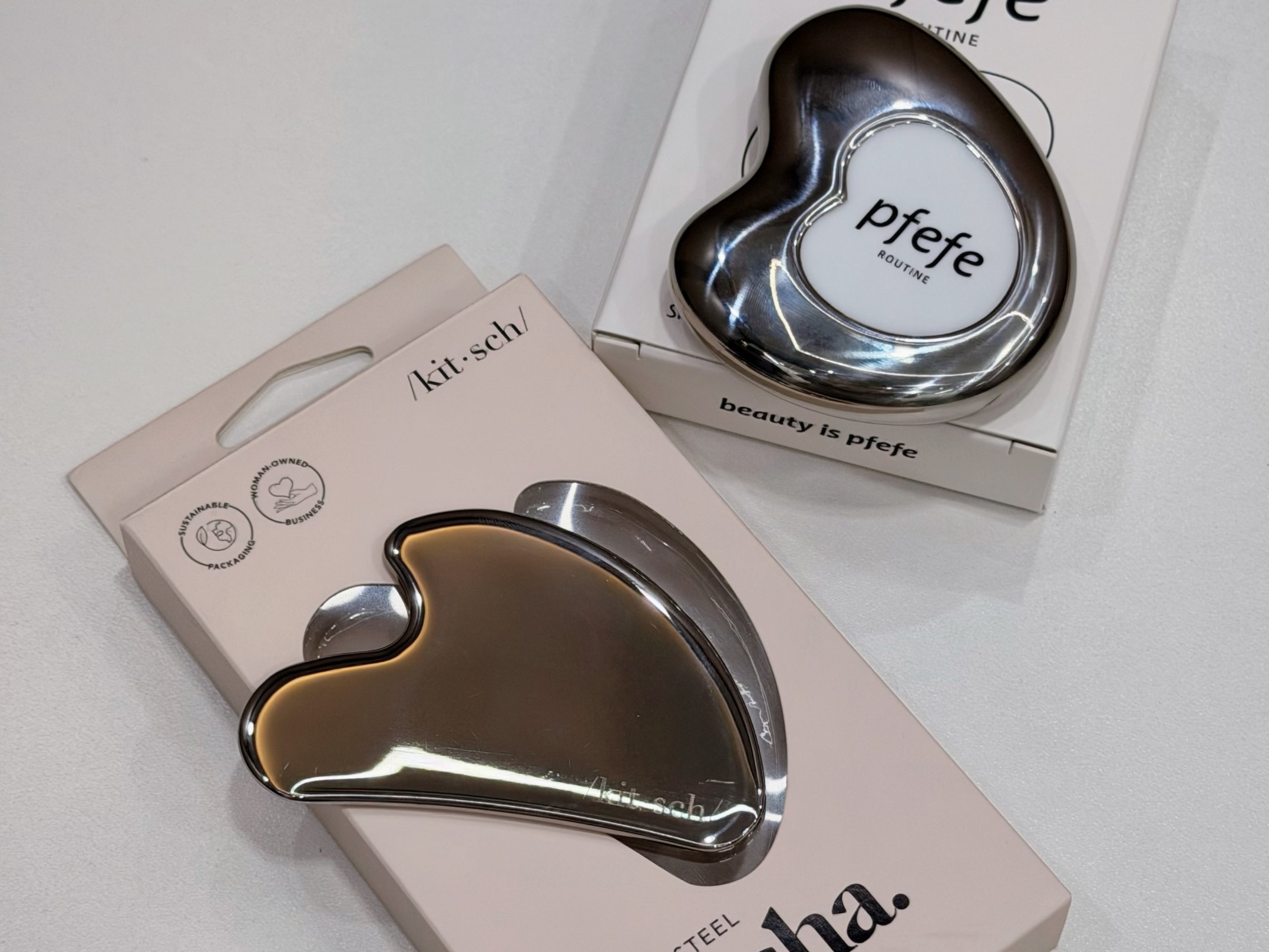
- Kitsch Stainless Steel Gua Sha: solid stainless steel, flat traditional shape with one dented curve for jawline contouring, no cooling mechanism built in, though it can be chilled in the fridge
- Pfefe White Cryo Gua Sha: stainless steel exterior with a coolant gel sealed inside, also has a dented curve, noticeably thicker than a traditional tool, silicone-wrapped center handle so fingers don’t freeze, designed specifically to be stored in the freezer or fridge before use
How I Tested
I used both tools for two weeks, alternating between them. My routine was quite simple and casual:
- Right after waking up: a quick session after waking up, or more specifically, after cleaning my face
- Throughout the day: additional short sessions whenever I felt tension building (or just felt like using), never more than 5 minutes at a time
- No other routine changes: same skincare products, same schedule
Experience With the Kitsch Tool
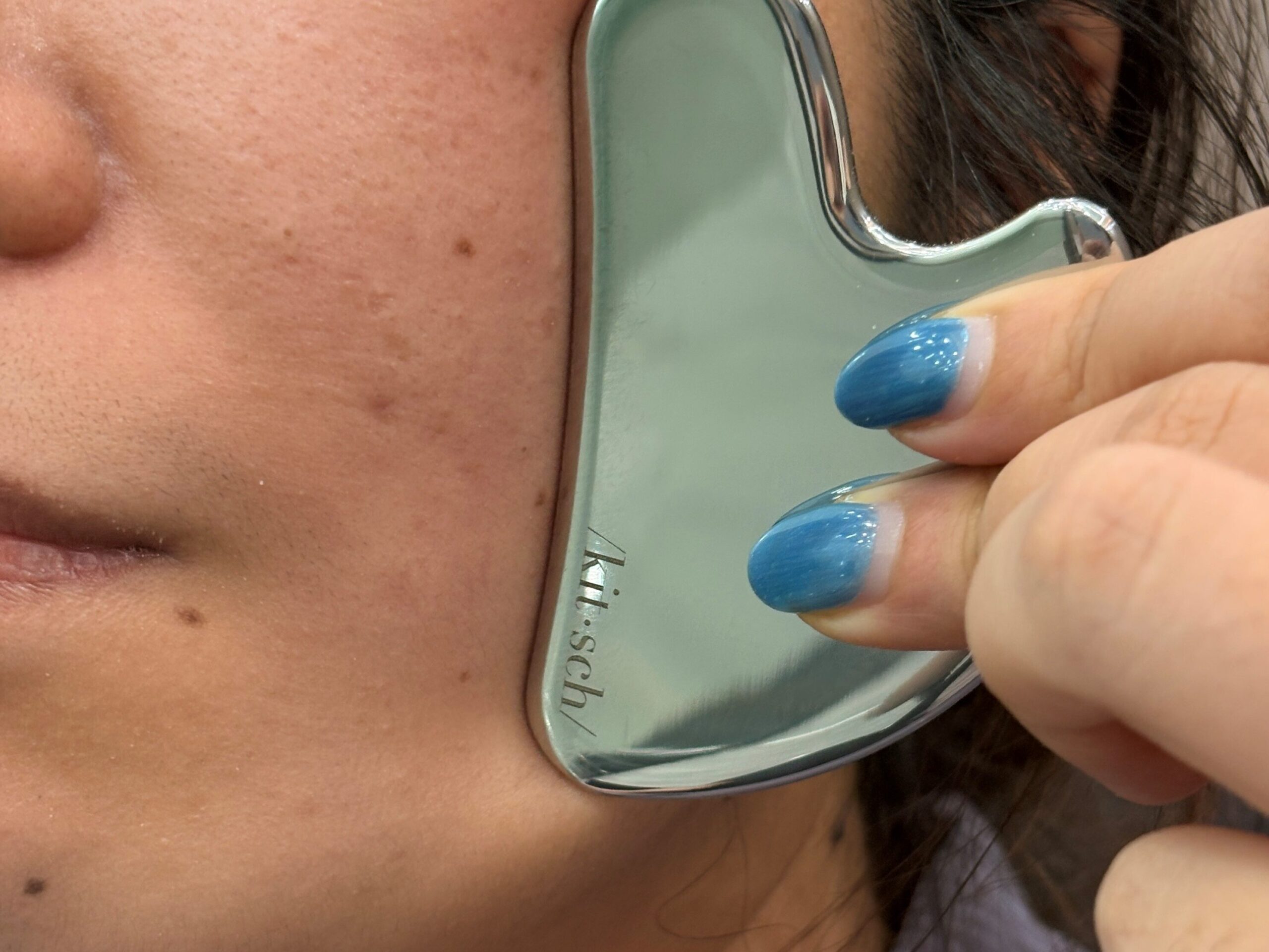
This one surprised me with how relaxing it felt. I used the dented curve along my jawline and the longer flat edge across my cheeks and forehead. I liked that I could control exactly how much pressure I applied session to session. My facial muscles felt very relaxed afterward.
It honestly felt a little like I was “detoxing” my skin, even though I know that’s not something gua sha actually does scientifically. What I can say for sure is that my face felt noticeably less tense throughout the day, starting right after the first use (no consistent use needed), and I did notice some mild de-puffing, especially in the mornings.
I also kept it in the fridge a few times for a cooling effect, but that chill faded within a couple of minutes of use, much faster than the Pfefe tool. As for lifting or sculpting, I didn’t notice much change on my face. But that wasn’t really my goal going in, so it didn’t bother me.
Experience With the Pfefe Tool
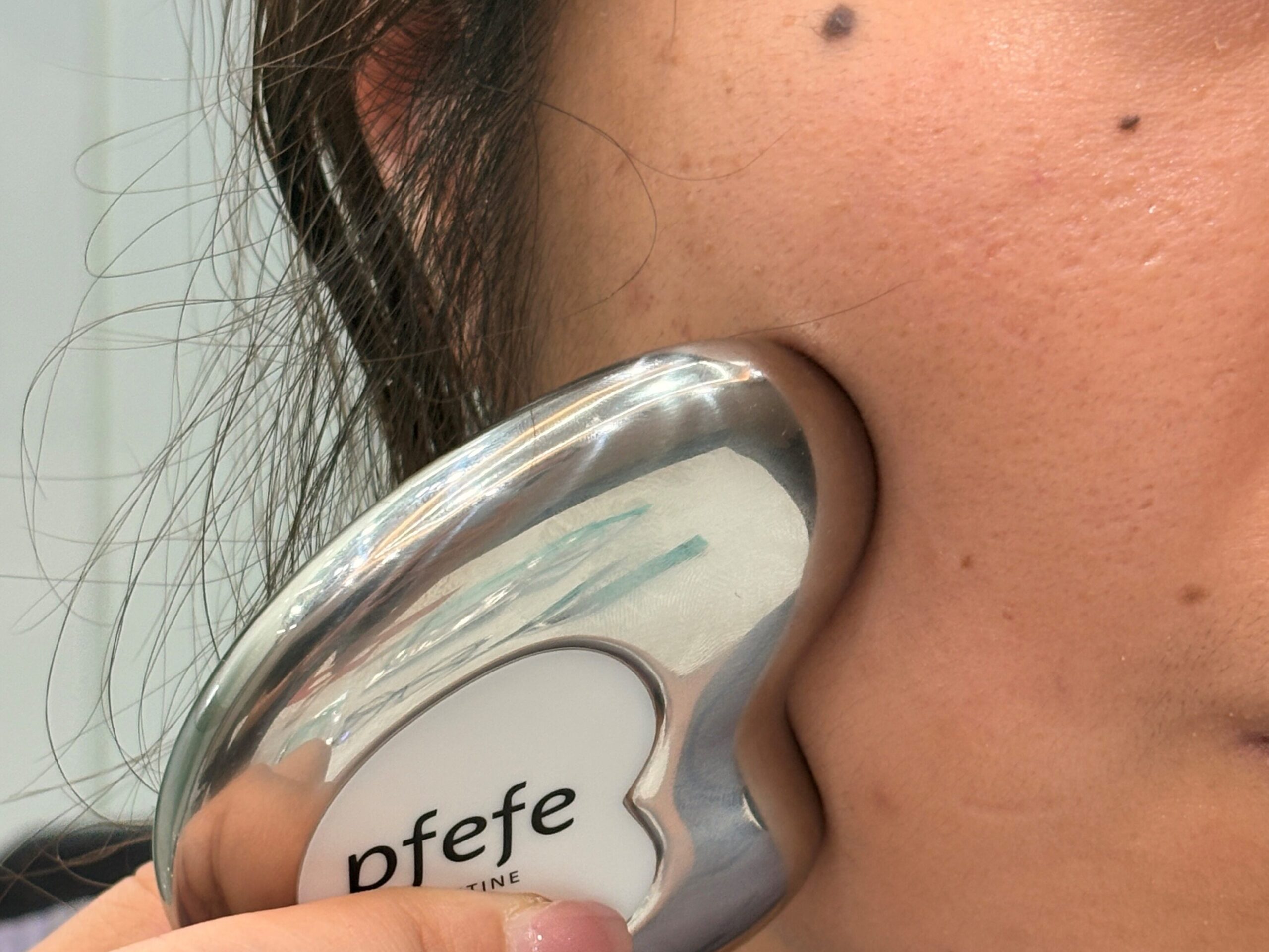
If the Kitsch tool was relaxing, the Pfefe tool was closer to an instant wake-up call. I kept it in the fridge overnight so it was ice cold every morning. Applying it right after washing my face felt very refreshing and soothing, especially during the summer season.
The tool itself is noticeably thicker than a traditional gua sha tool, and you can actually hear the coolant liquid shift inside if you shake it. That thickness meant it didn’t glide with the same “sharp,” precise edge a traditional tool has, so the actual gua sha technique felt a little different in my opinion. The silicone handle in the center made a real difference here too. My fingers never got uncomfortably cold, and it was a lot easier to grip and operate than I expected.
Where this tool clearly won was de-puffing. It was faster and more noticeable than what I got from the Kitsch tool, and my face looked visibly smaller right after use. I also noticed a temporary jawline-lifting effect that showed up more with this tool than the other one. Muscle relaxation was still there, just not quite as deep as what I felt with the Kitsch tool.
What’s Actually Different, and Why
Looking at both experiences together, it makes sense why they felt different. The Kitsch tool’s benefit is mostly mechanical: the gliding motion and pressure I controlled were doing the work, improving circulation and easing muscle tension the same way any facial massage would. The Pfefe tool adds a second mechanism on top of that same massage action: cold-induced vasoconstriction, where blood vessels tighten in response to cold and then relax as skin warms back up (read our deep dive blog on what cryotherapy tools can and can’t do here). That combination is likely why the de-puffing and temporary lift felt stronger and more immediate with the cryo tool.
The coolant gel inside the Pfefe tool is also just a smarter design for anyone specifically chasing that cold effect. The Kitsch tool works fine chilled, but plain stainless steel warms up to room temperature much faster than a sealed coolant core does.
Which One Should You Buy
If your main goal is stress relief and a deeper, more massage-focused routine, I’d go with the Kitsch tool. If you want a fast morning reset and noticeable de-puffing, especially if you deal with puffiness regularly, the Pfefe tool is the better pick. Honestly, using both the way I did, at different points in the day, ended up being my favorite approach, but if you only want one, let your primary goal decide.
Q&A
Does gua sha actually detox your skin?
No, not in a literal sense. The relaxing feeling is real, but there’s no evidence it removes toxins from your skin.
Is the de-puffing effect from cryo gua sha permanent?
No, it’s temporary, generally fading within a few hours as your skin returns to its normal temperature and blood flow.
Can you use both tools in the same routine?
Yes, that’s actually what I ended up doing, using the traditional tool for a slower massage and the cryo tool for a quicker refresh.
Which one is better for jawline definition?
The Pfefe cryo tool gave a more noticeable, though temporary, jawline effect during my testing, but neither tool produces lasting structural change.
Sources
- “Effect of Gua Sha Therapy on Perimenopausal Syndrome: A Randomized Controlled Trial”, 2017, https://pmc.ncbi.nlm.nih.gov/articles/PMC5651461/
- “Gua Sha: How Do You Use It, and What Are the Benefits?”, 2022, https://www.healthline.com/health/gua-sha-benefits
- “Cutaneous Blood Flow Changes During Gua Sha Treatment”, 2007, https://pmc.ncbi.nlm.nih.gov/articles/PMC2647333/
- “Vasoconstriction and Vasodilation in Response to Cold Exposure”, 2018, https://www.ncbi.nlm.nih.gov/books/NBK526124/