An electric nail file seems like a useful shortcut for at-home manicures. Gel comes off quickly, thick enhancements become neatly shaped, and a collection of attachments promises to handle everything from removal to finishing.
The appeal is understandable, especially if you spend a long time filing by hand. But whether an e-file improves your routine depends on what you wear on your nails and how you plan to use it. Someone who maintains acrylic enhancements has different needs than someone who occasionally removes gel polish.
Before buying, it helps to understand where the tool fits, how removal methods vary, and what protects the natural nail.
Main Takeaways
- An electric nail file can make enhancement maintenance more efficient, particularly in trained hands.
- Check the exact coating before removing it. Soak-off gel, hard gel, and builder products have different removal requirements.
- Focus on comfortable handling, suitable attachments, clear instructions, and support rather than a large accessory kit.
- If you feel heat or pain during filing, stop and reassess.
- When you buy, consider dust control, cleaning, replacement supplies, and training.
What Does an Electric Nail File Do?
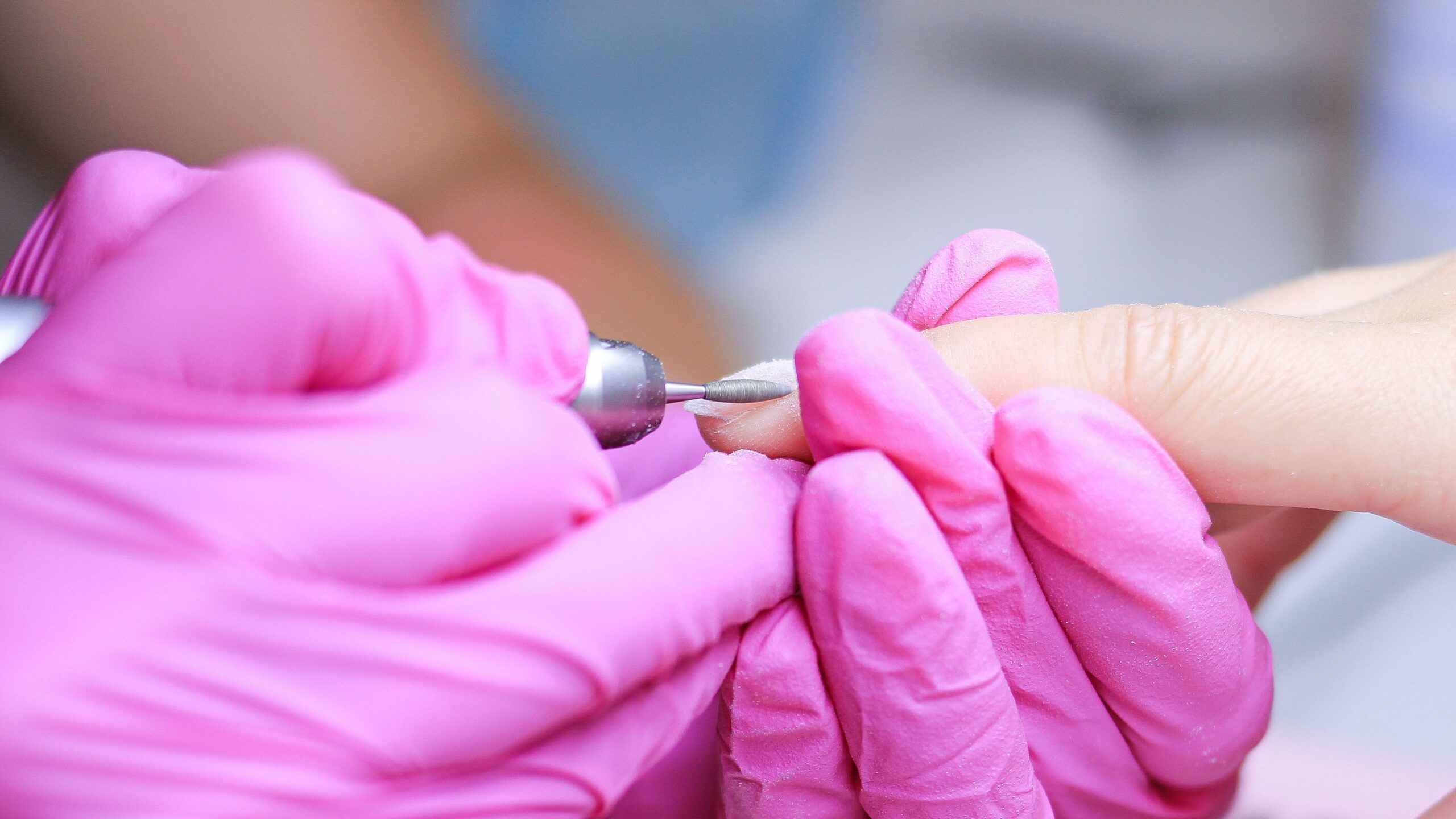
An electric nail file, also called an e-file or nail drill, uses a motorized handpiece with interchangeable rotating attachments. During a manicure, those attachments file or abrade material. Nail technicians use them to shorten enhancements, refine their shape, reduce product bulk, and prepare for maintenance. The attachment and technique change with the material being worked on.
Much of the tool’s value comes from efficiency. Shaping thick enhancements by hand takes time, especially during repeated salon services. An e-file can reduce that workload when the user understands the product, the attachment, and how much material to remove.
For home users, the decision is simpler: identify the job you want help with. If your routine includes regular polish, shaping short natural nails, or occasional soak-off gel removal, you may already have everything you need.
Before Removal, Know What Is on Your Nails
The phrase “gel nails” leaves a lot unexplained. A thin colored coating and a structured extension can look similar, yet respond very differently to remover.
| Product | Usual removal approach | What to check |
|---|---|---|
| Regular nail polish | Compatible polish remover | An e-file has little purpose here |
| Soak-off gel polish | Acetone-based removal | Follow the product’s instructions and allow sufficient removal time |
| Traditional hard gel | Mechanical filing | Seek trained removal if you lack experience |
| Builder gel | Depends on the formulation | Check whether the exact product is soak-off or file-off |
| Acrylic or dip systems | Often acetone-based | Confirm the system and manufacturer’s removal instructions |
For ordinary soak-off gel polish, acetone removal is the recommended home approach. Dermatologist Shari Lipner warns that picking or filing gel polish off can significantly damage the natural nail.
Traditional hard gel resists acetone and requires filing. Understanding the difference between soak-off and hard gel helps prevent frustrating removal attempts or overly aggressive removal.
“Builder” describes a product’s structural role. Some builder systems soak off; others require filing. Check the specific formulation rather than choosing a method based on the name alone.
Just as gel-and-lamp compatibility matters during curing, the product’s instructions matter at removal. If you don’t know what was applied, ask the salon before you start.
When an E-File Is Worth Considering
An electric file is most useful if you regularly maintain enhancements and know how to work on them safely. A powered tool can make it easier to reduce bulk, refine a thicker coating, or prep an enhancement for a refill.
The value is less clear if you only do occasional manicures. Buying a machine introduces new attachments, cleaning requirements, consumables, and a learning curve. Those additions should solve a genuine inconvenience in your routine.
A hand file remains a practical choice for basic natural-nail shaping. Compatible removers handle regular polish, while soak-off gel requires its specified acetone process.
Before purchasing, ask:
- What would I use this for regularly?
- Do I understand the product I am removing?
- Have I learned how to choose and handle the attachments?
- Am I willing to manage the dust and maintain the equipment?
What Can Go Wrong During Filing?
Removing too much nail material
The main concern is accidentally filing through the coating and into the natural nail. The transition can be difficult to recognize, especially when a thin layer of product remains. Repeated surface preparation can also add up across manicures, even when each session seems gentle.
Dermatologists explain that filing for artificial nails can thin and weaken natural nails. Soreness, unusual flexibility, and sensitivity after removal deserve attention; acetone-related dryness is only one possible explanation.
A fresh coating can hide the damage, but the missing nail material still needs time to grow out.
Friction and heat
Rotating attachments create friction. Heavy pressure, unsuitable attachments, and lingering over one spot can make filing uncomfortable and increase the risk of damage.
No universal speed setting compensates for poor technique. Focus on the whole interaction: the attachment, material, pressure, movement, and your ability to see what you are doing. Stop if filing feels hot, sharp, or painful. Chasing a smooth finish can turn a manageable problem into a sore nail.
Injury around the nail
Fine work around the nail folds requires precision. Living skin provides a protective barrier, and cutting or abrading it increases infection risk.
Treat attachment kits cautiously. A pointed bit in the box gives you access to a tool; using it safely requires understanding the surrounding anatomy and technique. Leave detailed work around living skin to someone appropriately trained.
Acetone or Filing? Follow the Product
Removal advice often becomes polarized: acetone gets blamed for every damaged nail, while electric filing is presented as the gentler upgrade.
A better approach is to consider both the coating and the nail’s condition. Acetone can dry or irritate surrounding skin. Excessive filing removes nail material. For a compatible soak-off product, protect the surrounding skin and follow the removal process instead of peeling or scraping off the attached coating. For acetone-resistant hard gel, prolonged soaking will not solve the problem. Arrange appropriate mechanical removal instead.
A technician reducing artificial-product bulk before removal is using a controlled technique. Copying that process without understanding the remaining layers can leave a home user filing farther than intended.
Plan for Dust and Tool Care
Capture dust near the work area
Electric filing produces fine product and nail dust. Some settles on the table; some remains airborne. Nail-industry educator Doug Schoon emphasizes controlling e-file dust through housekeeping and suitable ventilation, preferably capturing particles close to where they are generated. Masks should not replace ventilation.
For regular home use:
- Choose a well-ventilated workspace.
- Keep your face away from the dust plume.
- Use suitable source-capture equipment when filing enhancements.
- Maintain the collector and clean the workstation as instructed.
- Consider where dust travels around other people in the home.
Occasional home use involves a different exposure pattern from daily salon work, but dust management still belongs in the setup.
Follow attachment-care instructions
Reusable attachments collect product and nail debris. Remove that material before carrying out the manufacturer’s recommended disinfection process. Avoid sharing tools, and replace disposable sanding bands rather than keeping them indefinitely.
A UV storage box is insufficient on its own. UV boxes don’t disinfect nail tools, and reusable tools need appropriate cleaning and disinfection first.
What Matters When Choosing an Electric Nail File?
Choose based on the work you intend to do and how comfortably you can control the tool. Prioritize:
- Comfortable handling: the handpiece should feel manageable and steady.
- Suitable attachments: each should have a clearly explained purpose.
- Clear instructions: look for guidance on intended uses, maintenance, and limits.
- Replacement availability: check whether compatible attachments and consumables are easy to obtain.
- Reliable support: warranty terms and accessible customer service matter.
- A workable setup: include lighting, dust capture, and space to keep tools organized.
- Appropriate training: budget time to learn rather than expecting the machine to teach you the technique.
Adjustable controls help, but maximum RPM matters less than practical handling and whether the tool fits the task. A large bit assortment can also be less helpful than a small selection you understand.
Include replacement supplies and dust-control equipment when calculating the device’s ongoing cost.
Conclusion
An electric nail file earns its place when it improves a task you perform regularly and know how to manage. For basic natural-nail care or occasional soak-off gel removal, simpler tools are often sufficient.
Start by identifying the coating, then choose a removal method that suits it. Seek professional help when the product is unknown, requires file-off removal, or covers an already painful or compromised nail.
A good home manicure routine should feel manageable and leave the nail underneath protected. Faster removal is useful only when it supports that goal.
Q&As
Do I need a nail drill to remove gel polish?
For ordinary soak-off gel polish, use the compatible acetone-based removal process. Hard gel and other file-off products require a different approach, ideally handled by a trained professional if you are inexperienced.
Can I use an electric file on natural nails?
Trained professionals use specific techniques, but beginners should avoid filing the nail surface with a powered tool. A hand file is usually sufficient for basic shortening and shaping. Repeated surface filing can thin the nail.
Is acetone worse than electric filing?
The coating and technique determine the appropriate choice. Acetone can irritate surrounding skin; excessive filing can weaken the nail. Follow the product’s removal instructions and avoid forcing off attached material.
What should I do if filing feels hot or painful?
Stop and leave the affected area alone. Seek medical assessment if pain, swelling, redness, drainage, or unexplained changes persist. Applying another coating or continuing to file can make the problem harder to identify.