Main Takeaways
- Air-drying is not the best method for frizz-prone hair.
- A gentle blow-dry can create a smoother result by controlling airflow and drying hair more evenly.
- High heat, close dryer distance, rough towel drying, and repeated brushing can all make frizz worse.
- Air-drying works best when preserving natural curl or wave definition is the goal.
- For many people, partial air-drying followed by a controlled blow-dry is the practical middle ground.
If your hair tends to frizz, skipping the hair dryer can seem like the obvious healthy choice. No heat should mean less damage, and less damage should mean smoother hair. Yet many people find the opposite: their hair air-dries puffy, rough, uneven, or less predictable than it does after a careful blow-dry.
That does not mean blow-drying is always better. Frizz is influenced by more than heat. Wet time, humidity, towel drying, product use, airflow direction, brushing, and natural texture can all change the final result.
Why Hair Gets Frizzy While Drying
Frizz is not simply a dry-hair problem. It is the visible result of hair responding to water, humidity, friction, heat, and its natural pattern. When hair is wet, it is more vulnerable to stretching and mechanical stress. Rubbing hard with a towel, detangling aggressively, tying it up tightly, or repeatedly touching it while it dries can leave the surface looking less smooth.
Humidity adds another layer. Hair can take up moisture from the air, then change shape as temporary bonds within the fiber shift. That is why hair may look smooth at home but expand, puff up, or lose definition outdoors. Frizz may show up as flyaways, a puffy crown, separated curls, enlarged waves, or a blowout that grows bigger during the day.
Naturally wavy, curly, coily, porous, color-treated, or chemically processed hair can be especially sensitive to these changes. Frizz does not automatically mean unhealthy hair; texture, climate, and the finish you want all matter.
Air-Drying: When It Helps and When It Does Not
Air-drying removes direct heat, which is an advantage for anyone reducing thermal styling. But it also leaves hair wet for longer. During that time, hair may be touched, tucked behind the ears, brushed, slept on, exposed to humid air, or allowed to dry in an uneven pattern.
For straight or wavy hair that puffs up, air-drying can create a less controlled result because there is no directed airflow to guide hair into place. Thick hair may stay damp near the roots long after the ends dry, while fine hair may separate into flyaways. Air-drying can become more frizz-prone when you keep rearranging your hair, use a rough towel, brush it repeatedly, or let it dry in high humidity without suitable product support.
However, air-drying t can work especially well for people who want to preserve their curl or wave pattern and know which products help the hair form clumps rather than separate. The key is usually to handle hair less, not more: gently remove water, apply product while damp, then leave the hair alone as much as possible.
Blow-Drying: Why It Can Look Smoother
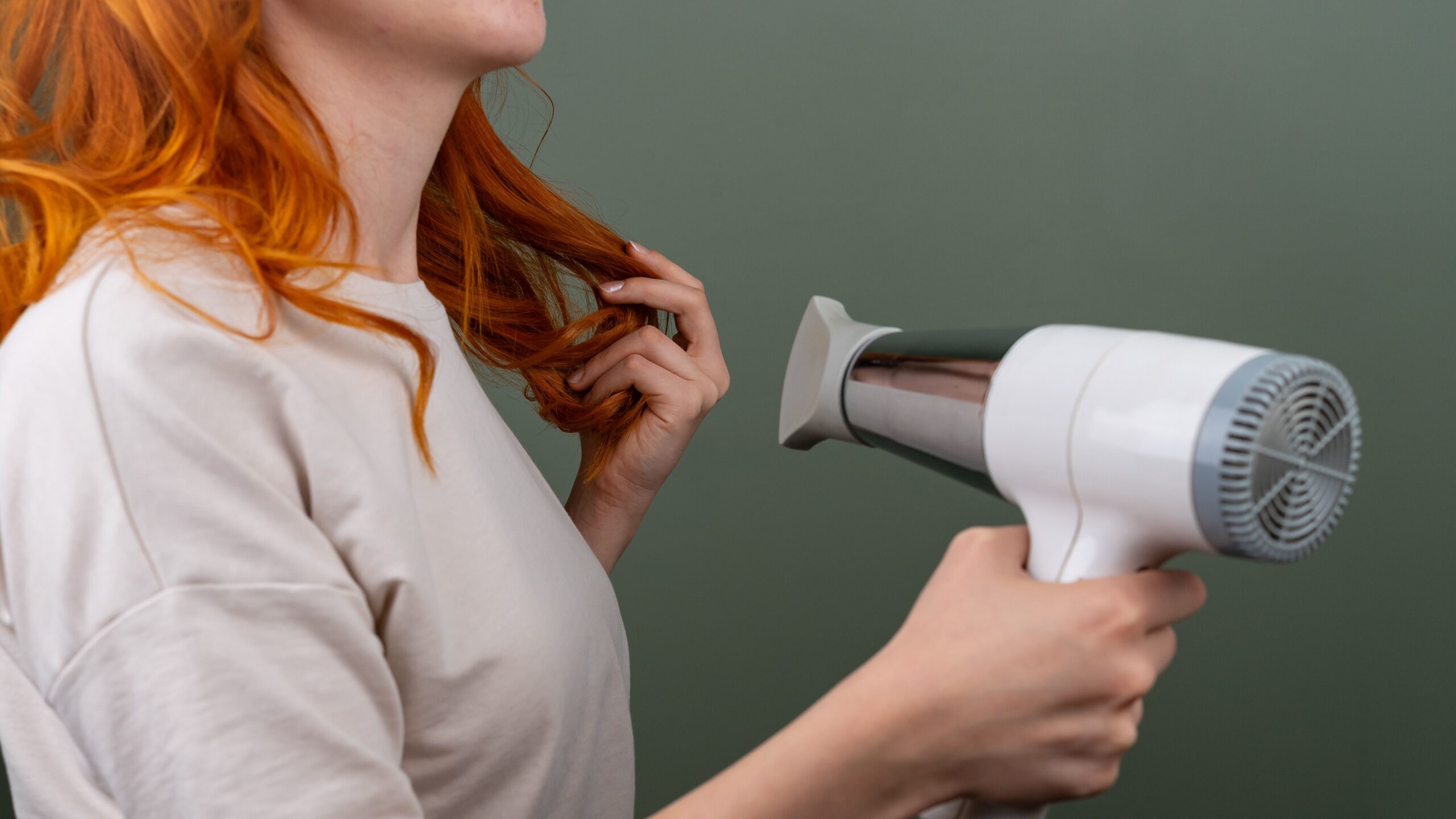
A controlled blow-dry can create a smoother-looking finish because it dries hair more evenly and lets you direct the airflow. A concentrator nozzle focuses air in one direction, while a careful brush-and-dryer technique can add gentle tension and help hair lie flatter. This is why a blowout may look more polished than hair left to dry freely.
It can also shorten the time hair stays wet. That may help if your roots stay damp for hours, your lengths tangle while drying, or your style expands quickly in humidity.
The important word is controlled. Very high heat, holding a dryer too close, leaving airflow on one area too long, or repeatedly pulling a brush through fragile hair can create the dryness and surface roughness that make frizz worse later.
A laboratory study on hair drying that repeatedly washed and dried untreated hair tresses found that higher heat and closer dryer distance produced more visible cuticle damage. The room-temperature, naturally dried group showed changes to the cell membrane complex. This study shows that heat, distance, and prolonged wet time all matter.
The Frizz Tradeoff: What Is Your Goal?
Choose the method around the result you want:
- For sleeker hair, low-to-medium heat and a concentrator nozzle usually give the most controlled finish.
- For natural curl definition, air-drying, diffusing, or a hybrid routine may create a better pattern than a sleek blowout.
- For root volume, a controlled blow-dry can lift the hair and set its direction.
- For minimum direct heat, air-drying or partial air-drying makes sense, provided you limit friction while hair is wet.
- For less time with damp roots, allow hair to air-dry partway, then finish with low or medium heat.
A Lower-Frizz Drying Routine
For air-drying
- Gently squeeze out excess water with a soft towel, microfiber wrap, or cotton T-shirt instead of rubbing.
- Apply leave-in conditioner, curl cream, mousse, or another suitable styling product while the hair is damp.
- Detangle with as little tension as possible, then avoid repeatedly touching or brushing the hair.
- If you wear waves or curls naturally, let the pattern dry in clumps rather than separating it with your fingers.
The American Academy of Dermatology (AAD) notes that leave-in conditioner can help reduce frizz, static, and flyaways. Apply it to damp hair, concentrating on dry or tangled lengths rather than the scalp.
For blow-drying
- Remove excess water first, then apply heat protectant.
- Start with low or medium heat instead of maximum heat.
- Keep the dryer moving and avoid concentrating airflow on one section.
- Use a concentrator nozzle for smoothness, or a diffuser when preserving waves or curls.
- Aim airflow down the hair shaft for a sleeker finish, and avoid repeatedly overbrushing one fragile area.
AAD’s hair-care guidance also recommends gentle handling of wet hair and low or medium heat when blow-drying. A cool shot is optional, but it can finish the style without adding more heat.
Do Smart Hair Dryers Change the Equation?
Some newer dryers include heat sensors, distance sensors, automatic heat adjustment, or scalp-protection modes. These features may help a user avoid overheating the hair or holding the dryer too close, especially if they style often.
They do not make a dryer damage-free. A smart feature cannot undo rough towel drying, aggressive brushing, repeated high-heat styling, or a routine that does not suit your texture. Treat sensor-led drying as a useful control feature, not a guarantee of healthier hair.
What to Look for in a Frizz-Friendly Dryer
You do not need to chase every technology label on the box. For this specific concern, practical control matters more than claims such as ionic, ceramic, tourmaline, or infrared alone.
Look for:
- Multiple heat and speed settings, so maximum heat is not your only option.
- A concentrator nozzle for directed airflow when you want a smoother finish.
- A diffuser if you regularly wear your hair wavy or curly.
- A comfortable weight and shape, because a dryer that is tiring to hold encourages rushed technique.
- Controls that are easy to change mid-style, especially if one part of your hair dries faster than another.
These features cannot eliminate humidity or repair existing damage, but they can make it easier to use a lower-stress drying routine consistently.
Conclusion
Air-drying is not the better choice for frizzy hair, and blow-drying is not the worse one. If hair turns puffy, rough, or unpredictable when air-dried, a gentle blow-dry with directed airflow may give a smoother result. If you wear naturally curly or wavy hair, air-drying or diffusing may preserve the pattern better.
You do not need to avoid every bit of heat. The goal is to reduce unnecessary stress: less rough towel drying, less friction while wet, less extreme heat, less repeated brushing, and a drying method that works with your natural texture rather than against it.