
A quick note before we start: this isn’t a sponsored review, and none of the brands covered here paid for a placement. This is our own deep dive into a category we are very interested in, put together so you can have a clearer, more complete picture before spending several hundred dollars on a device.
Main Takeaways
- At-home anti-aging lasers now fall into 3 broad mechanisms: fractional, non-fractional, and cold laser (LLLT), and each comes with a different balance of intensity, comfort, and downtime.
- Wavelength determines depth. Shorter infrared wavelengths like 1450nm and 1440nm target the dermis for collagen stimulation, while 1064nm reaches deeper still.
- Fractional lasers tend to deliver more dramatic results but come with more discomfort. Non-fractional and cold laser options trade some intensity for comfort and speed.
- Price doesn’t always track with technology sophistication. Some of the priciest options rely on gentler mechanisms with thinner independent evidence behind them.
- Real user reviews are more varied than brand marketing suggests, and results can differ a lot from person to person, even with the same device.
Why At-Home Lasers Are Having a Moment
At-home laser devices have come a long way from being a niche, hard-to-find purchase. The category has matured into a credible middle ground between everyday skincare and in-clinic treatments, offering some of the same laser science without the appointment, the numbing cream, or the four-figure invoice. For anyone who already takes their skincare seriously, that’s a good choice to consider. Still, the brand name on the box tells you little on its own. What really matters is the wavelength, the delivery method, and how much evidence backs up the specific device you’re considering.
How These Devices Work: Wavelength and Depth
Every laser in this category is defined first by its wavelength, since that number determines how deep the light travels and what it targets once it gets there.
- 1450nm is absorbed strongly by water in the skin, making it effective at heating the dermis and triggering collagen production.
- 1440nm targets a similar depth through the same water-absorption principle and mirrors the core wavelength used in some professional resurfacing systems.
- 1064nm penetrates deeper still. DermRays Revive uses this wavelength paired with notably high energy output, aiming for a more pronounced remodeling effect.
- Near-infrared cold laser skips heat. LYMA’s device relies on low-level laser therapy to stimulate cells through light absorption rather than thermal energy.
Fractional vs. Non-Fractional vs. Cold Laser
Fractional lasers break the beam into thousands of microscopic points rather than treating the full surface at once. This concentrates energy more intensely per point, which tends to produce more visible results, but also comes with more sensation during treatment and a short period of mild redness afterward.
Non-fractional lasers spread energy evenly across a wider treatment tip. Sessions feel gentler and move faster, though intensity still varies by wavelength and energy density.
Cold laser doesn’t generate heat at all. It’s the gentlest of the three, with essentially zero sensation during use, but it asks for a longer daily time commitment to make up for its lower intensity per session.
What the Different Technologies Are Best Suited For
- Fine lines and early prevention: gentler non-fractional or cold laser options, since the goal is maintenance rather than aggressive correction
- Deeper wrinkles and texture concerns: fractional lasers, which concentrate energy enough to produce more noticeable change over a treatment course
- Skin tightening and firmness: higher-energy, deeper-penetrating options like 1064nm devices
- General glow and low-commitment maintenance: cold laser or shorter daily-session devices that don’t require building tolerance to discomfort
Laser Devices Comparison Table
| Product Names | Wavelength | Technology | Price | Session Time | FDA Status |
|---|---|---|---|---|---|
| NIRA Laser | 1450nm | Non-fractional, non-ablative | $449–$699 | 2–5 min daily | FDA-cleared |
| Tria FRX | 1440nm | Fractional, non-ablative | $699.99 | ~2 min daily | FDA-cleared |
| LYMA Laser | 808nm | Cold laser (LLLT) | $2,695–$5,995 | 15–30+ min daily | FDA-cleared |
| DermRays Revive | 1064nm | Non-fractional, non-ablative | $799 | 4–8 min, 3–4x/week | FDA-cleared |
| MimiSilk Iris | 1450nm | Fractional, non-ablative | $699 | 5–10 min, 3–4x/week | FDA-cleared |
NIRA
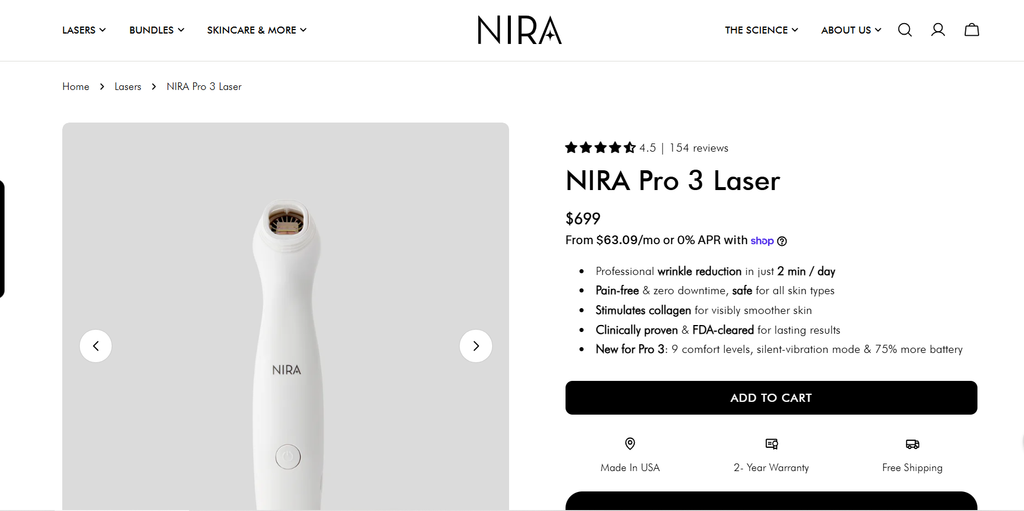
- Uses a 1450nm diode laser in a non-fractional, non-ablative design, meaning it heats the dermis evenly without breaking the surface into micro-zones
- The Precision model targets small, hard-to-reach areas like crow’s feet and under-eye lines; the Pro model covers broader facial areas
- Sessions run 2 to 5 minutes daily, though some users report closer to 12 minutes to fully treat the face
- Backed by an independent, blinded clinical study, plus endorsements from board-certified dermatologists
What users say: Experiences are varied. Some reviewers describe it as easy to fit into a daily routine, with gradual smoothing of fine lines over consistent use. Others, including several long-term users on Reddit’s r/30PlusSkinCare, used it diligently for 6 to 8 months without seeing visible change, and a few reported burns or dark, bruise-like patches after months of conservative use. It’s a device where user reviews seems to vary more than most.
Tria FRX
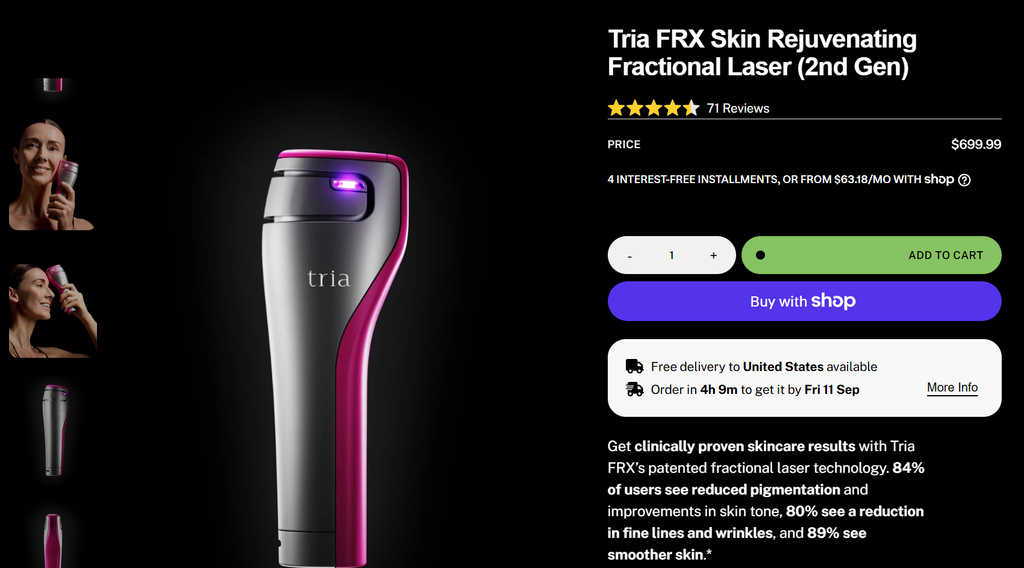
- Fractional, non-ablative laser running at 1440nm, distributing energy across thousands of microscopic treatment points per session
- Redesigned in 2026 with a larger battery and faster charging compared to earlier generations
- The company reports 80% of users saw reduced wrinkles and 84% saw improved pigmentation after an eight-week course, based on its own testing
- Marketed as suitable across all skin tones, since it targets water in the skin rather than melanin
What users say: Feedback here skews notably positive. One RealSelf reviewer described visible fading of brown spots within two weeks and tighter, more plumped skin after a full two-month course, alongside the expected mild redness and flaking as it worked. A more recent review echoed this, noting clear improvement in pore size, texture, and overall tone after eight weeks, while being upfront that it isn’t built to address sagging or facial structure, since that falls outside what a resurfacing laser is designed to do.
LYMA Laser
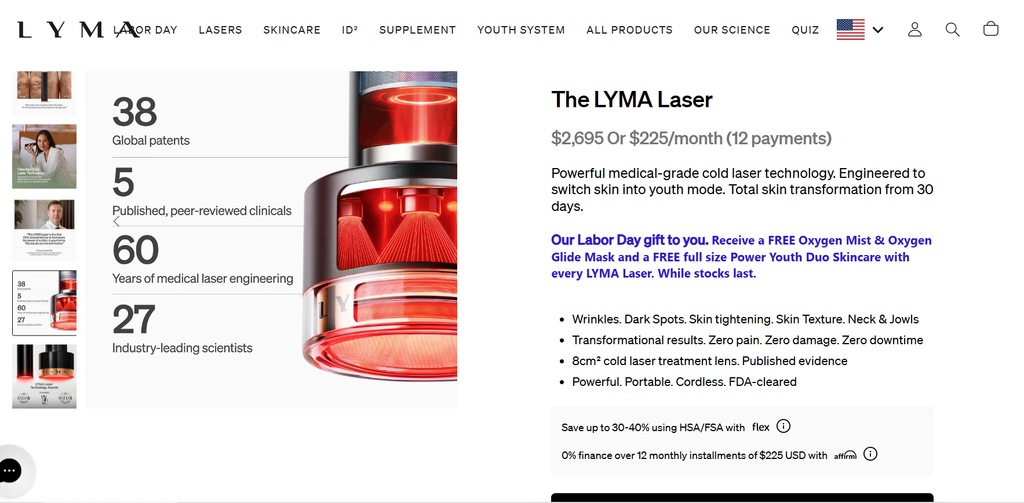
- Near-infrared cold laser built on low-level laser therapy (LLLT), skipping heat-based resurfacing entirely
- No fractional or ablative element, meaning essentially zero sensation during use
- Base model priced at $2,695, with a higher-powered Pro version at $5,995, positioning it well above every other device on this list
- Sessions run considerably longer, 15 to 30 minutes daily, to compensate for the gentler mechanism
What users say: A Harper’s Bazaar reviewer who used the device for years reported improvements in skin laxity, firmness, and texture, with zero discomfort and no downtime, describing it as one of the easiest devices to build a daily habit around. The main consideration most reviewers raise isn’t effectiveness but value: independent, peer-reviewed data on this specific device is thinner than what backs some of the thermal lasers on this list, so much of the improvement story still rests on brand-funded research and personal testimonials.
DermRays Revive
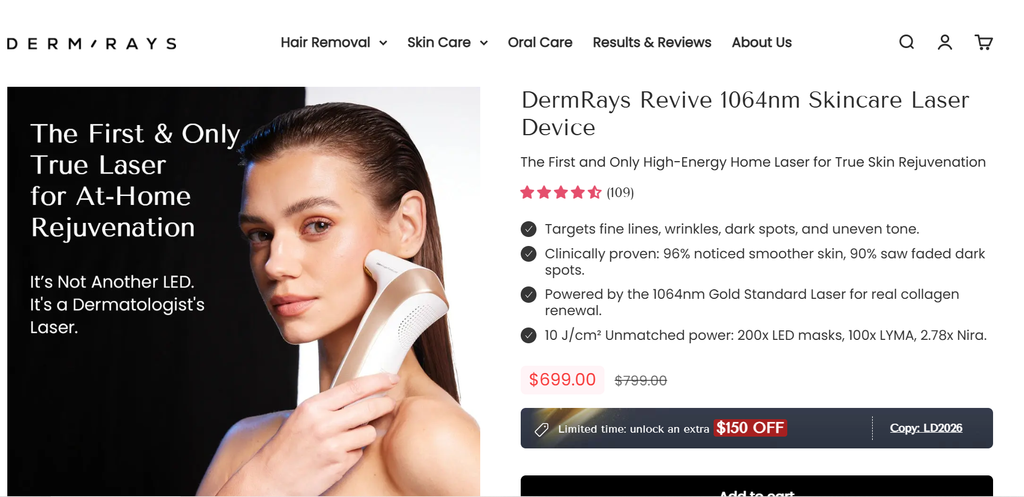
- Single 1064nm wavelength diode laser at a high 10 J/cm² energy density, paired with built-in cooling to offset discomfort
- Non-fractional design, treating the full area rather than breaking it into micro-zones
- Recommended schedule tapers from 3 to 4 sessions weekly at first down to occasional maintenance use
- Appears to be out of stock in US market
What users say: Early feedback on Reddit’s r/SkincareAddictionLux has been largely positive, with one five-week user describing more glowy, uniform skin tone and a genuinely noticeable difference, along with praise for how quiet the device runs. Longer-term, non-sponsored reviews are still limited, and the brand advises against using it over coarser facial hair due to burn risk, worth keeping in mind depending on where you plan to use it.
A note on availability: As of early 2026, multiple US-based users have reported the Revive going in and out of stock or disappearing from DermRays’ US site entirely. Check with DermRays’ site for availability before you buy.
MimiSilk Iris
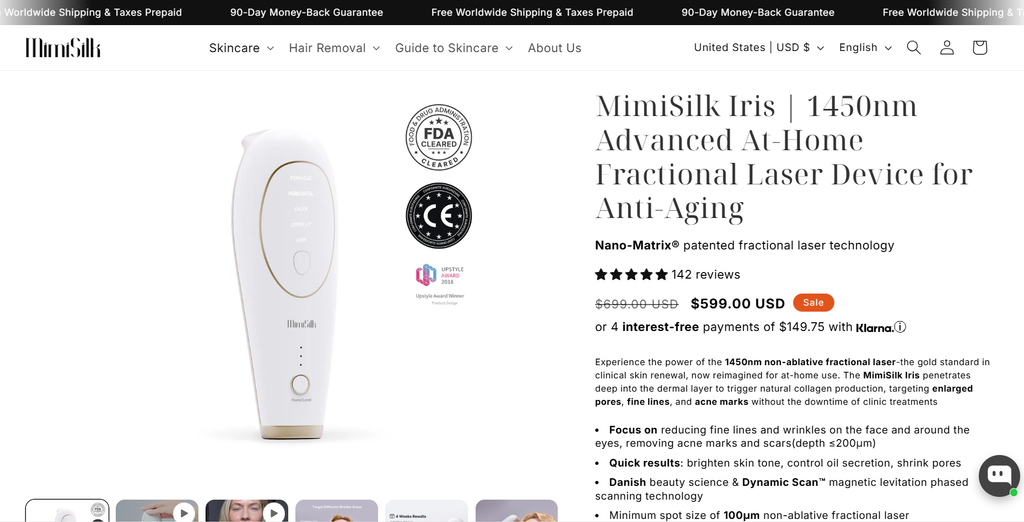
- Fractional, non-ablative 1450nm laser with a small 100-micron spot size, delivered through the brand’s Nano-Matrix technology
- Classified as a Class 1 laser, meaning it’s safe to use around the eyes, a detail highlighted in reviews as a real usability plus
- Follows an 8-week-on, 4-week-off treatment cycle, with sessions of 5 to 10 minutes, 3 to 4 times weekly
- Reported improvement figures come directly from the brand’s own testing rather than independent clinical trials
What users say: Reviews are generally positive with some real variation in comfort. On Trustpilot, one long-term user said they still find the higher intensity levels hard to tolerate, while another described being genuinely impressed by visible improvement and collagen-related changes. A Reddit thread in r/DIYaesthetics offered a similarly measured take, with the user reporting improved forehead wrinkles and better overall skin quality and elasticity after consistent use.
What to Check Before You Buy
- FDA clearance status, and ideally, whether that clearance was granted directly to the brand rather than inherited
- Skin tone and pigmentation compatibility, since some laser wavelengths interact differently with melanin
- When to expect real results, generally weeks to months rather than days
- Patch testing before a first full-face session, especially with fractional devices
- Your comfort tolerance, since most lasers involve real sensation, and reviews suggest tolerance varies more from person to person
Which Device Should You Invest In?
If you want quick, low-discomfort sessions and are mainly managing fine lines, a non-fractional device like NIRA is a forgiving entry point. If you’re dealing with more visible texture or wrinkle concerns and are comfortable with some sensation in exchange for stronger results, Tria FRX or MimiSilk Iris are the more fitting fractional choices. If skin tightening and firmness are the priority, DermRays Revive’s deeper-penetrating laser is worth a look. And if comfort and simplicity matter most, and budget isn’t the deciding factor, LYMA’s cold laser offers a different, sensation-free experience.
Conclusion
It’s hard to say that there’s a single best at-home laser in 2026. The right pick depends on your specific skin concerns, your budget, your tolerance for discomfort, and how much daily time you’re willing to commit. A device that works beautifully for one person can be a frustrating miss for someone else, which is exactly what the mixed reviews across every brand on this list reflect. Compare more than price before buying: check the wavelength, mechanism, clearance status, and user feedback rather than relying on a single testimonial or a brand’s own clinical claims.
This category also isn’t slowing down. The at-home laser market is projected to keep growing at a steady clip through the mid-2030s, with the industry shifting from one-time device sales toward more of an ongoing ecosystem of apps, subscriptions, and accessories built around the hardware. Expect more multi-use devices and better built-in safety features going forward, which makes understanding the technology more useful than chasing whichever name is trending.