The home beauty device market is now worth billions — but most buyers pick a device based on marketing copy rather than an actual understanding of what the technology does. Before you spend anywhere from $30 to $500 on a gadget, you need one thing: a clear, honest explanation of how each technology works, what it’s actually proven to do, and who it’s right for.
We’ve mapped out the 7 most mainstream home beauty device technologies in 2026 — what each one actually does, what the science supports, and where the limits are.
The Technologies at a Glance
Not all beauty devices work the same way or target the same skin concerns. Here’s a high-level overview before we go deeper:
| Technology | Primary Benefit | Skin Depth | US Price Range |
|---|---|---|---|
| RF (Radiofrequency) | Skin tightening, collagen stimulation | Deep (dermis) | $130 – $400 |
| Microcurrent | Facial lifting, muscle toning | Surface to muscle layer | $120 – $595 |
| LED Light Therapy | Acne (blue), anti-aging (red), skin repair | Surface to mid-dermis | $70 – $455 |
| IPL (Intense Pulsed Light) | Permanent hair reduction | Hair follicle (deep) | $50 – $500+ |
| EMS (Electrical Muscle Stimulation) | Muscle sculpting, contouring | Muscle layer | $30 – $250 |
| Ultrasonic / Sonic Cleansing | Deep pore cleansing, product absorption | Surface (epidermis) | $30 – $200 |
| High-Frequency (HF) | Acne treatment, oil control | Surface (epidermis) | $20 – $100 |
Prices sourced from current US retail listings.
RF (Radiofrequency)
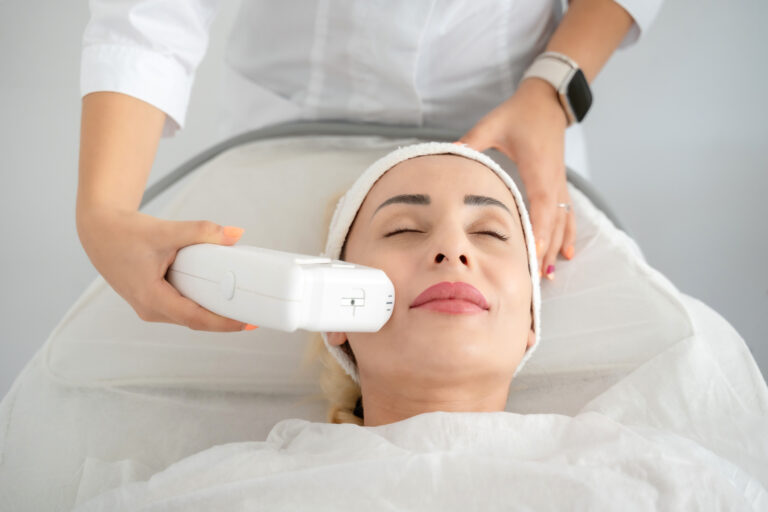
What it is: RF devices deliver controlled heat energy deep into the dermis — the layer of skin where collagen and elastin live. The heat triggers the body’s natural repair response, stimulating new collagen production over time.
What the science says: RF is one of the better-studied non-invasive skin tightening technologies. The key caveat: home devices operate at much lower power levels than clinical RF machines (for safety reasons), which means results are real but slower and subtler than in-clinic treatments.
What it won’t do: RF does not remove wrinkles overnight, and it will not replicate the results of a professional Thermage or Morpheus8 session. Claims about RF “melting fat” at home are not supported by evidence at consumer-grade device power levels.
Best for: People in their 30s–50s dealing with mild skin laxity, fine lines, and loss of firmness.
Microcurrent
What it is: Microcurrent devices send very low-level electrical currents through the skin and into the facial muscles — currents so small they’re measured in microamperes. The technology was originally developed for facial paralysis rehabilitation and has since been adapted for cosmetic use.
What the science says: Several FDA-cleared microcurrent devices have demonstrated measurable effects on facial muscle tone, ATP production (cellular energy), and temporary lifting. Results require consistent, ongoing use — most users report visible results in 4–8 weeks.
What it won’t do: Microcurrent works primarily on the surface-to-muscle layer. It does not produce structural collagen changes the way RF does. Results are considered “temporary tone,” not permanent restructuring.
Best for: Facial contouring, jawline definition, lifting the brow and cheekbone area. Suitable for most adult ages.
LED Light Therapy
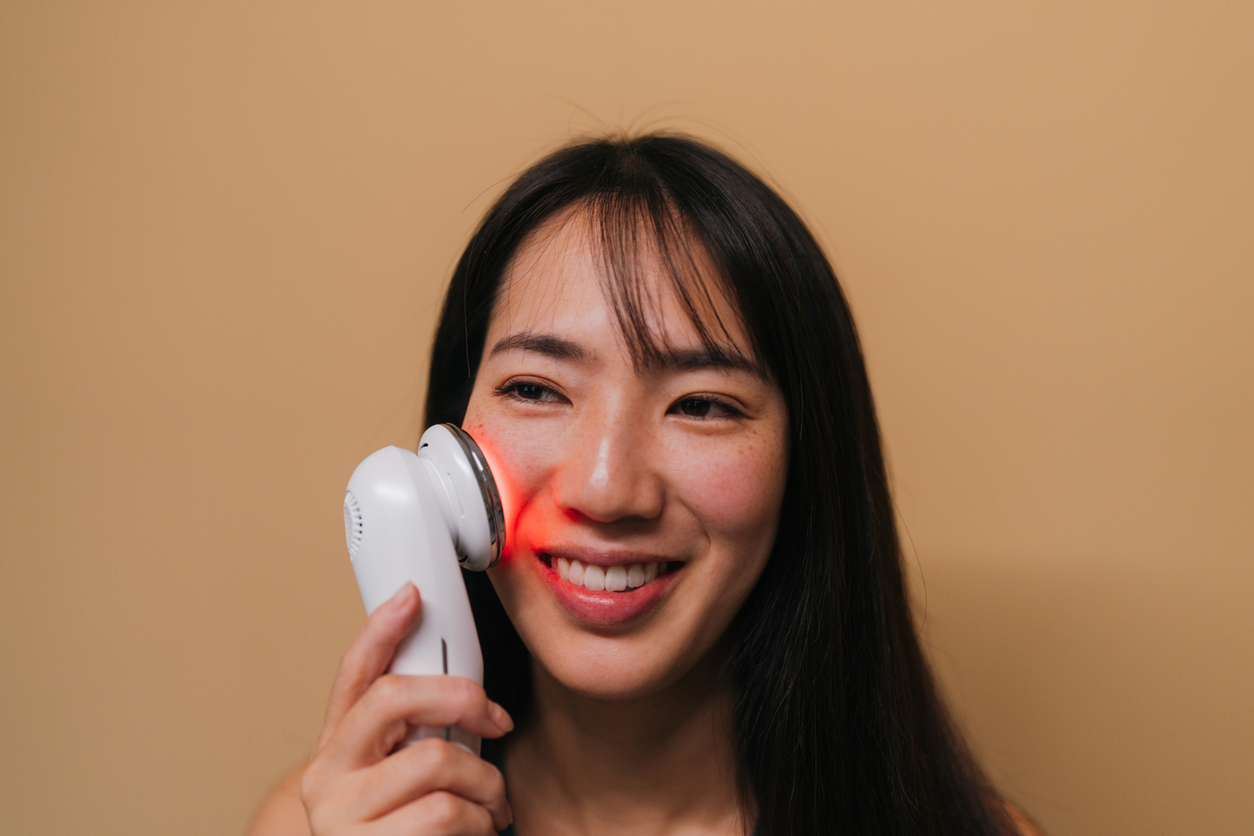
What it is: LED (light-emitting diode) devices use specific wavelengths of light to trigger biological responses in the skin. Unlike laser light, LED is non-thermal and non-ablative — it doesn’t heat or break the skin. Different colors do different things.
Wavelength guide:
- Blue light (~415 nm): Targets acne-causing bacteria (Cutibacterium acnes) and helps reduce breakouts
- Red light (~630–660 nm): Supports collagen production, reduces inflammation, improves skin texture
- Near-infrared (~830 nm): Penetrates deeper for wound healing and cellular repair
- Yellow light: Supports lymphatic drainage, may help with redness and rosacea
What the science says: Blue and red LED are the best-evidenced wavelengths for home use. A 10nm difference in wavelength genuinely changes which cellular targets the light reaches — which is why cheap devices with vague “red light” claims are worth scrutinizing.
What it won’t do: LED is not a replacement for prescription acne treatments in moderate-to-severe cases, and a single session will not produce visible anti-aging results. Consistency over weeks is key.
Best for: Acne-prone skin (blue), anti-aging routines (red), general skin health maintenance.
IPL (Intense Pulsed Light)
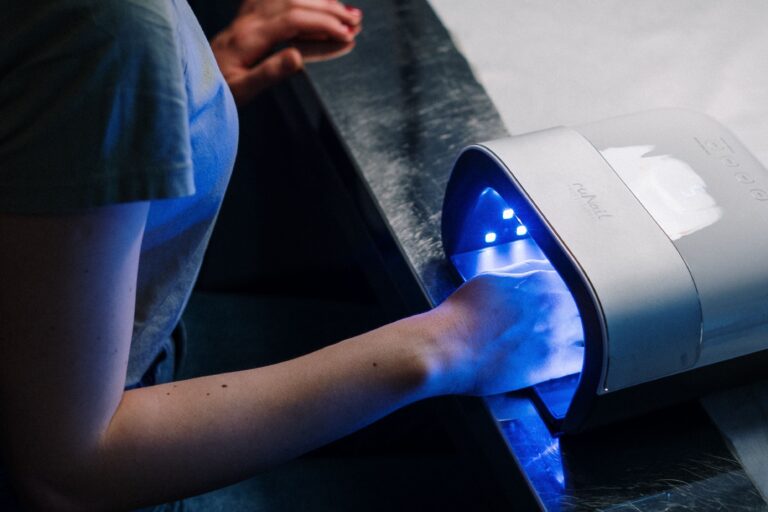
What it is: IPL is the most common technology in at-home hair removal devices. It delivers broad-spectrum light pulses that are absorbed by the pigment (melanin) in hair follicles, damaging the follicle and inhibiting regrowth over multiple sessions.
What the science says: IPL for hair removal has a strong body of clinical evidence. At-home IPL devices are effective but require more sessions than professional treatments due to lower energy output. Most users see significant reduction after 8–12 sessions.
Important safety note: IPL is not suitable for all skin tones. Traditional IPL devices rely on the contrast between dark hair and light skin — people with darker skin tones should look for devices with Fitzpatrick Scale ratings or use Nd:YAG laser-based alternatives, and always consult a dermatologist first.
What it won’t do: IPL is not the same as a clinical laser. It is less precise, less powerful, and should not be confused with laser skin rejuvenation treatments. It is primarily a hair removal tool in the home setting.
Best for: Unwanted body and facial hair in people with light to medium skin tones and dark hair.
EMS (Electrical Muscle Stimulation)
What it is: EMS delivers short electrical pulses to trigger involuntary muscle contractions in the face — essentially a workout for your facial muscles. While similar in concept to microcurrent, EMS uses higher current levels and is focused specifically on the muscle layer rather than the skin surface.
What the science says: EMS is well-documented in physical therapy for body muscles, but facial applications have less robust independent clinical evidence in the home device context. EMS is often bundled with RF or microcurrent in multi-function devices, making it harder to isolate its effects.
What it won’t do: EMS alone will not tighten skin texture or address pigmentation. It targets muscle tone, not skin quality.
Best for: Facial sculpting, reducing puffiness, defining jaw and cheekbone contours. Often appealing to users in their late 20s–40s.
Ultrasonic / Sonic Cleansing
What it is: Ultrasonic and sonic cleansing devices use high-frequency vibrations (typically 20,000 Hz and above) to loosen dead skin cells, unclog pores, and improve the absorption of serums and moisturizers.
What the science says: The cleansing efficacy of sonic devices is reasonably well-supported. The claim that ultrasonic vibrations dramatically boost product absorption is more promising than proven — emerging research suggests benefits, but it is not yet conclusive at consumer device power levels.
What it won’t do: Ultrasonic cleansing does not replace exfoliation entirely, and it will not treat active acne or reduce wrinkles. It’s a surface-layer tool.
Best for: All skin types for deep cleansing. Particularly useful for oily, congested, or acne-prone skin.
High-Frequency (HF)
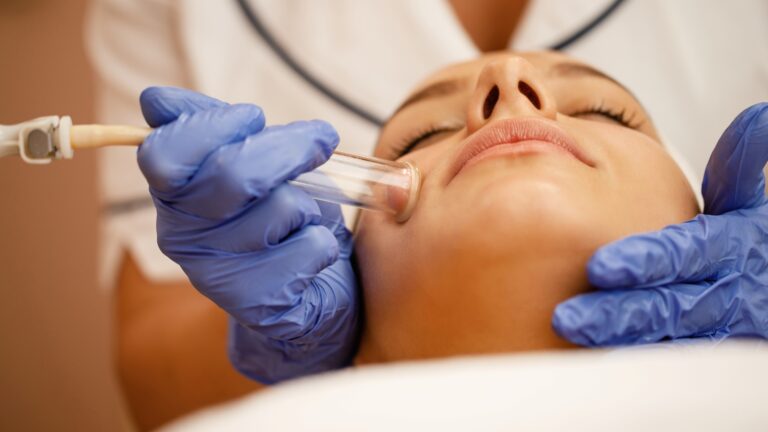
What it is: High-frequency wands use an alternating electrical current passed through a glass electrode filled with noble gas (argon for blue/violet light, neon for orange/red light). The current creates ozone at the skin’s surface, which has a natural antibacterial effect.
What the science says: The antibacterial and sebum-regulating effects of ozone are scientifically documented. However, high-frequency devices have the least robust body of clinical evidence among the seven technologies on this list. Most support comes from practitioner experience rather than randomized controlled trials.
What it won’t do: HF is not a serious anti-aging tool. It won’t tighten skin, stimulate deep collagen, or remove hair. Think of it as a targeted acne-control supplement to your routine, not a core device.
Best for: Oily, acne-prone skin; treating localized breakouts; reducing cystic inflammation.
Which Technology Is Right for You?
Your skin concern should drive your device choice — not the price tag or the packaging. Here’s a quick cheat sheet:
| Your Main Concern | Start Here |
|---|---|
| Fine lines and skin tightening | RF |
| Facial lifting and contouring | Microcurrent or EMS |
| Acne and breakouts | LED (blue) or High-Frequency |
| Anti-aging and collagen support | LED (red) or RF |
| Unwanted body/facial hair | IPL |
| Clogged pores and dull skin | Ultrasonic / Sonic Cleansing |
| Multiple concerns at once | Look for combo devices (RF + EMS + LED) |
One honest note: no home device will replicate clinical results. Every technology on this list is a consumer-grade adaptation of professional equipment, operating at lower power for safety. That’s not a reason to avoid them — consistent at-home use genuinely delivers results for most people. It’s just a reason to have calibrated expectations from the start.
Sources
- NiceMay Beauty. “The Top 10 Radio Frequency and Microcurrent Beauty Devices of 2026.” NiceMayBeauty.com. 2026. https://nicemaybeauty.com/the-top-10-radio-frequency-microcurrent-beauty-devices-of-2026/
- ZendaGuide. “Facial Devices Explained (2026): Benefits, Limits & Smart Picks.” ZendaGuide.com. December 28, 2025. https://www.zendaguide.com/post/best-facial-devices
- Synclite Beauty. “5 At-Home Beauty Devices to Replace Cosmetologist Visits.” SyncliteBeauty.com. November 21, 2025. https://synclite-beauty.com/blog/choosing-a-device/beauty-gadgets-that-will-replace-a-cosmetologist/
- LYMA. “Best Beauty Gadgets and Skin Care Devices 2025.” LYMA.life. October 6, 2025. https://lyma.life/blogs/laser/beauty-gadget-breakdown
- TWL Dermatologist. “Best Home Facial Devices: Dermatologist’s Complete Guide.” TWLSkin.com. April 16, 2024. https://twlskin.com/best-home-facial-devices-dermatologists-guide/
- Elle. “The 7 Best Radio Frequency Devices for Skin in 2026.” Elle.com. April 22, 2026. https://www.elle.com/beauty/g65540698/best-radio-frequency-devices-for-skin/
- Vogue. “These Are the Best Radio Frequency Devices to Stimulate Collagen.” Vogue.com. August 19, 2025. https://www.vogue.com/article/best-radio-frequency-devices
- CNET. “Best LED Masks of 2026, Cleared by the FDA.” CNET.com. March 30, 2026. https://www.cnet.com/health/best-led-face-masks/
- Glamour. “6 Best Red-Light Therapy Masks That Actually Work 2026.” Glamour.com. 2026. https://www.glamour.com/gallery/best-led-face-masks
- Women’s Health. “11 Best Red Light Therapy Tools of 2026.” WomensHealthMag.com. May 3, 2026. https://www.womenshealthmag.com/beauty/g42005167/best-red-light-therapy-tools/
- Women’s Health. “10 Best At-Home Laser Hair Removal Devices of 2026.” WomensHealthMag.com. March 22, 2026. https://www.womenshealthmag.com/beauty/g38828659/best-laser-hair-removal-devices/
- EvenSkyn. “The Complete 2026 Guide to At-Home RF Skin Tightening.” EvenSkyn.com. April 20, 2026. https://www.evenskyn.com/blogs/skin-beautyarticles/best-rf-skin-tightening-device-2026
- The Derm Spot. “Top Skincare Devices for Radiant Skin in 2026.” TheDermSpot.com. January 23, 2026. https://thedermspot.com/top-skincare-devices-for-radiant-skin-transform-your-routine-in-2026/
- CNET. “The Best Microcurrent Devices of 2026.” CNET.com. April 13, 2026. https://www.cnet.com/health/best-microcurrent-devices/