Wrinkle patches have become a popular option for people looking to smooth fine lines and soften the appearance of wrinkles without adding another complicated step to their skincare routine. Applied to areas such as the forehead, between the eyebrows, around the eyes, or across the chest, these adhesive patches are designed to hold the skin in a smoother position or create a moisture-retaining barrier.
However, not all wrinkle patches work in the same way. Paper patches provide physical support, silicone wrinkle patches help retain moisture, and dissolving microneedle patches deliver skincare ingredients through tiny projections. Each type works differently and offers different potential benefits.
So, do wrinkle patches work, and how long do the results last? In this post, we explain how these products work, what clinical studies have found, and where they fall short, so you can decide whether wrinkle patches are worth trying.
Main Takeaways
- Different materials serve different purposes. Paper patches provide physical support, silicone sheets help retain moisture, and dissolving microneedle patches deliver active ingredients.
- Conventional adhesive patches offer the clearest benefit: temporary smoothing. Clinical studies report improved wrinkle appearance after use, but the effects are relatively short-lived.
- Results depend on the type of patch and the treatment goal. These products are better suited to temporary surface smoothing than to lasting reduction of established wrinkles.
What Are the Different Types of Wrinkle Patches?
Although they share a similar name, wrinkle patches come in several distinct designs. Their materials and construction determine how they interact with the skin.
Paper Patches: Holding the Skin in Place
Paper wrinkle patches use an adhesive to hold the skin in a smoothed position. Once applied, the patch dries and becomes firm, restricting movement and helping prevent the covered area from folding during wear.
Frownies Facial Patches are a well-known example. They are made from unbleached kraft paper with a water-activated, starch-based adhesive. Unlike ingredient-based skincare products, they contain no active ingredients intended to penetrate the skin. Their function comes primarily from the physical support they provide. This is why paper patches are often marketed for expression lines, particularly those across the forehead and between the eyebrows. By limiting repeated folding while the patch is attached, they help keep the skin smoother.
Some brands also describe their products as retraining facial muscles. However, this claim is much stronger than simply holding the skin in place. Available clinical studies on adhesive pads have not shown that conventional patches produce lasting changes in facial muscle activity.
Silicone Patches: Creating a Moisture-Retaining Barrier
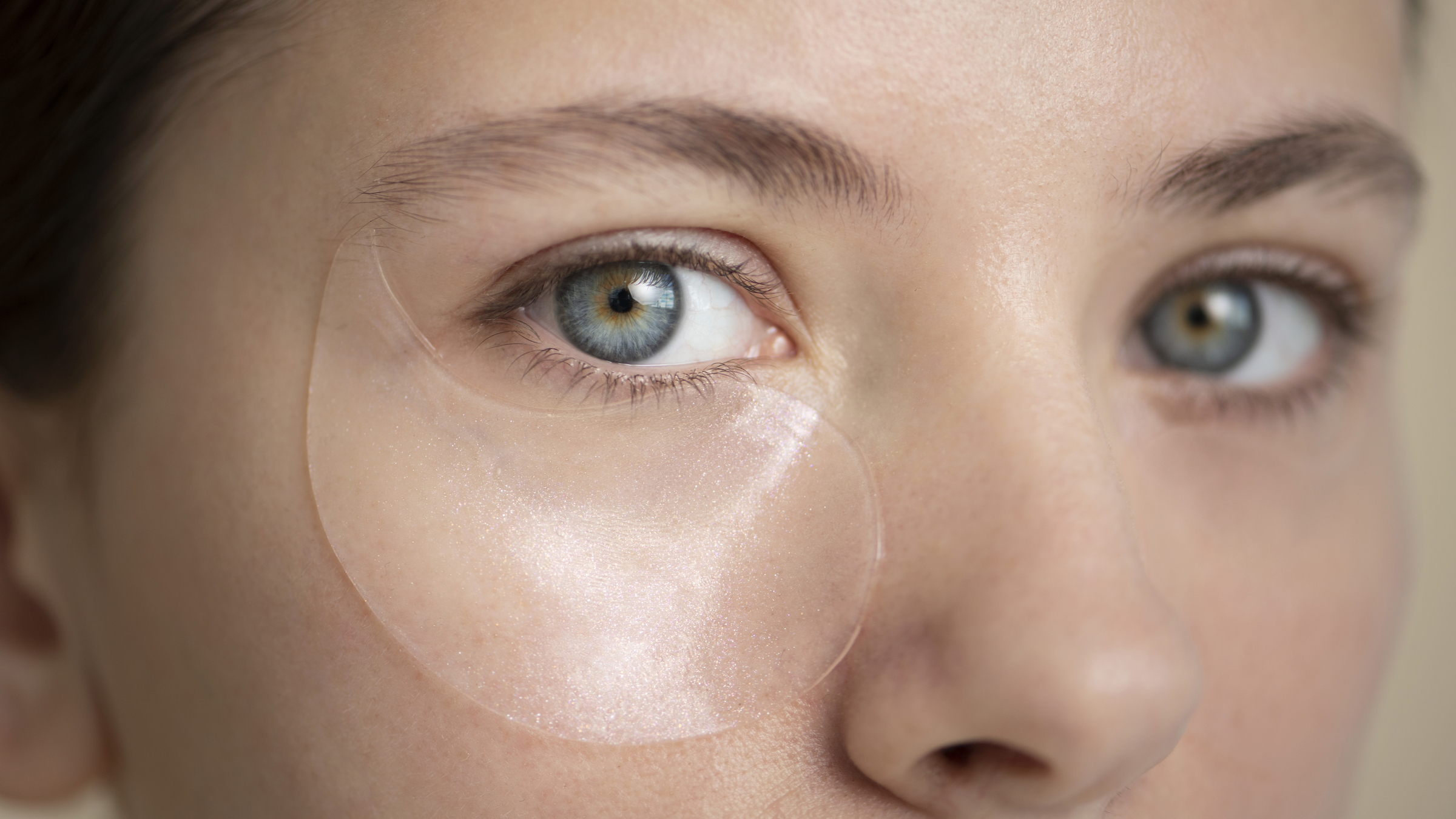
Rather than drying into a firm structure, silicone patches form a flexible covering over the skin, helping reduce transepidermal water loss (TEWL) and retain moisture.
This is known as occlusion. By limiting water loss from the skin’s surface, the covered area stays more hydrated. Better surface hydration can temporarily make fine lines appear less pronounced and leave the skin looking smoother.
Wrinkles Schminkles, for example, offers reusable silicone patches designed for areas such as the forehead, eyes, neck, and chest. Its products are intended to be applied to clean, dry skin without skincare underneath.
Silicone’s history in scar management is why this material is often associated with skin-smoothing products. However, its established use in scar care should not be confused with proven wrinkle-reduction efficacy. The two applications have different treatment goals, and evidence for one doesn’t validate the other.
Dissolving Microneedle Patches: Delivering Active Ingredients
A third category consists of dissolving microneedle patches. Unlike ordinary paper or silicone sheets, these products contain tiny projections designed to penetrate the outermost layer of skin and dissolve, releasing their ingredients.
Hyaluronic acid is a common material used to form these microneedles. Some formulations also incorporate other skincare ingredients, such as adenosine or peptides, to target signs of skin aging. Researchers have also explored dissolving microneedle patches to deliver ingredients for wrinkle treatment. For example, a 2018 clinical study investigated soluble hyaluronic acid microneedle patches for crow’s-feet and nasolabial folds, examining their potential to improve the appearance of these wrinkles.
Do Wrinkle Patches Actually Work?
The answer depends on what you expect them to accomplish.
Conventional wrinkle patches have a clear physical function: they hold the skin in place or create a covering that helps retain moisture. They can improve the appearance of the treated area while you wear the patch and for some time after you remove it.

This makes them best for temporary smoothing. For instance, someone might use a forehead patch overnight to reduce the appearance of expression lines in the morning, or apply a silicone eye patch before makeup to give the skin a more hydrated appearance.
These products also offer a practical advantage. Unlike treatments that rely on active ingredients or specialized equipment, wrinkle patches are easier to get used to and use because they don’t add another active skincare formula to your routine.
However, a smoother appearance immediately after removal doesn’t indicate that the underlying wrinkle has become shallower. To understand the difference, let’s look at the research paper.
What Does Clinical Research Say About Wrinkle Patches?
Two clinical studies provide useful insight into the effects of conventional adhesive pads. Both examined wrinkle changes following repeated use, but their findings also highlight the difference between short-term improvements and lasting results.
Crow’s-Feet: Measurable Smoothing After Application
A 2018 study published in the Journal of Cosmetic Dermatology examined the effects of topical adhesive pads on crow’s-feet in 39 participants. Researchers assessed two treatment schedules: a single 30-minute application and nightly use over 4 weeks. They measured changes in skin surface roughness at different intervals after removing the patches.
The results showed a significant reduction in several skin roughness measurements 15 minutes after the single application. After the 4-week treatment period, surface roughness improvements remained measurable up to 60 minutes after removal. Participants’ own assessments suggested that the visible effect lasted approximately two hours.
However, the study found no significant changes in the elastomeric measurements used to assess skin elasticity. These findings tell us that adhesive pads can measurably improve the appearance of crow’s-feet, particularly immediately after use. They also indicate that the effect is temporary, not a lasting change in skin structure.
Forehead Lines: Limited Improvement After 4 Weeks
Another study published in Archives of Facial Plastic Surgery investigated whether topical adhesive pads could reduce forehead wrinkles and glabellar lines (the creases between the eyebrows).
Participants wore the pads overnight for 4 weeks, averaging 7.4 hours of use per night. Some participants reported improvement in the lines between their eyebrows. However, the results were less encouraging when photographs were assessed independently. Two facial plastic surgeons found no statistically significant improvement in either the central forehead or glabellar area.
The difference between participants’ own assessments and the independent evaluations is worth noting. A product can make the skin look or feel better to its user without producing a measurable change in wrinkle severity under clinical assessment.
What Can We Take Away From These Studies?
Together, the findings suggest that conventional adhesive wrinkle patches are better at temporarily smoothing the skin than at producing lasting wrinkle reduction.
The crow’s-feet study demonstrated measurable changes in surface roughness after use, while the forehead study found no significant improvement following 4 weeks of overnight application. Neither study establishes that regular patch use permanently reduces established wrinkles or retrains facial muscles. However, these results also should not be considered as universal performance results for every marketed product: the studies examined specific patches under specific conditions.
If you’re considering wrinkle patches, know that a temporary improvement can still be beneficial, especially if your goal is a smoother-looking appearance for a few hours.
How to Decide Whether Wrinkle Patches Are Worth It
A good way to evaluate a wrinkle patch is to consider both the visible improvement and the experience of using it.
You can start by comparing your appearance at different times. Take a photograph before an application, another shortly after removal, and a third later in the day.
You can also consider a few questions:
- Is the difference noticeable? Does the treated area look smoother to you?
- How long does the effect last? Does it remain visible long enough to meet your expectations and needs?
- Is the patch comfortable? Can you wear it without disrupting sleep or irritating your skin?
- Is the upkeep worthwhile? Do the cleaning, removal, and replacement requirements fit your routine?
If you plan to use patches before an important event, try them on an ordinary day first. This gives you an opportunity to assess how your skin responds and whether the results last long enough for the occasion.
Ultimately, a temporary improvement is not necessarily a disappointing one. Someone looking for a quick beauty boost may find wrinkle patches useful, while someone hoping to substantially reduce deep, established lines will likely need to consider other approaches.
The Bottom Line
Wrinkle patches are a convenient, straightforward way to temporarily smooth wrinkles or fine lines. Paper patches hold the skin in a fixed position, while silicone patches help retain moisture and improve the appearance of surface lines. Dissolving microneedle patches are more innovative, using tiny projections to deliver skincare ingredients.
Research papers support short-term improvements in wrinkle appearance, but they didn’t establish a lasting reduction in established wrinkles. Silicone’s established role in scar management also shouldn’t be mistaken for proof of long-term anti-aging benefits.
Whether these products are worth your money comes down to what you expect from them. If you want a temporary smoother appearance, wrinkle patches are a good option, since they don’t add new skincare ingredients to your skin. For more substantial, longer-lasting wrinkle improvement, look beyond surface-level smoothing and choose other options.
Frequently Asked Questions
Can you put wrinkle patches over retinol?
It depends on the patch and your skin’s condition. Some silicone patches require completely clean, dry skin, while certain paper patches let skincare products absorb before you apply them.
Retinol can cause dryness, peeling, and irritation. Avoid applying patches over irritated or compromised skin, and check the compatibility instructions for both products before combining them.
Are silicone scar sheets the same as silicone wrinkle patches?
They share a similar material, but their intended applications are different. Silicone sheets have an established role in scar management, particularly for certain raised scars. Wrinkle patches use silicone’s moisture-retaining and adhesive properties to smooth skin.
Scientific results supporting silicone for scar care do not automatically demonstrate that all silicone patches can effectively reduce facial wrinkles.
How long do wrinkle patches last?
The duration of the visible effect depends on the patch type, the treated area, and individual skin characteristics. Check the product descriptions.
Will wrinkles come back after you stop using wrinkle patches?
They primarily provide physical support or moisture retention during wear. Once removed, their effects gradually fade, and the underlying factors responsible for the wrinkles remain. If you enjoy the temporary smoothing effect, you may need repeated applications to achieve it again.